
Custom Furniture vs Ready Made Furniture Which Is Better for an American Home
For many American homeowners, the choice between custom furniture and ready-made furniture comes up as soon as they start furnishing a new house, renovating a family home, or preparing a second home. It is not only a style decision. It affects budget, delivery timing, room layout, storage, and how finished the home feels after move-in.
Ready-made furniture is useful when speed, clear pricing, and simple purchasing matter most. Custom furniture is worth considering when standard sizes do not fit the room, when storage needs are specific, or when several rooms need to feel connected as one whole-home plan.
The strongest homes usually use both. The practical question is not whether custom or ready-made furniture is better in general. The better question is where each option makes sense inside a real American home.
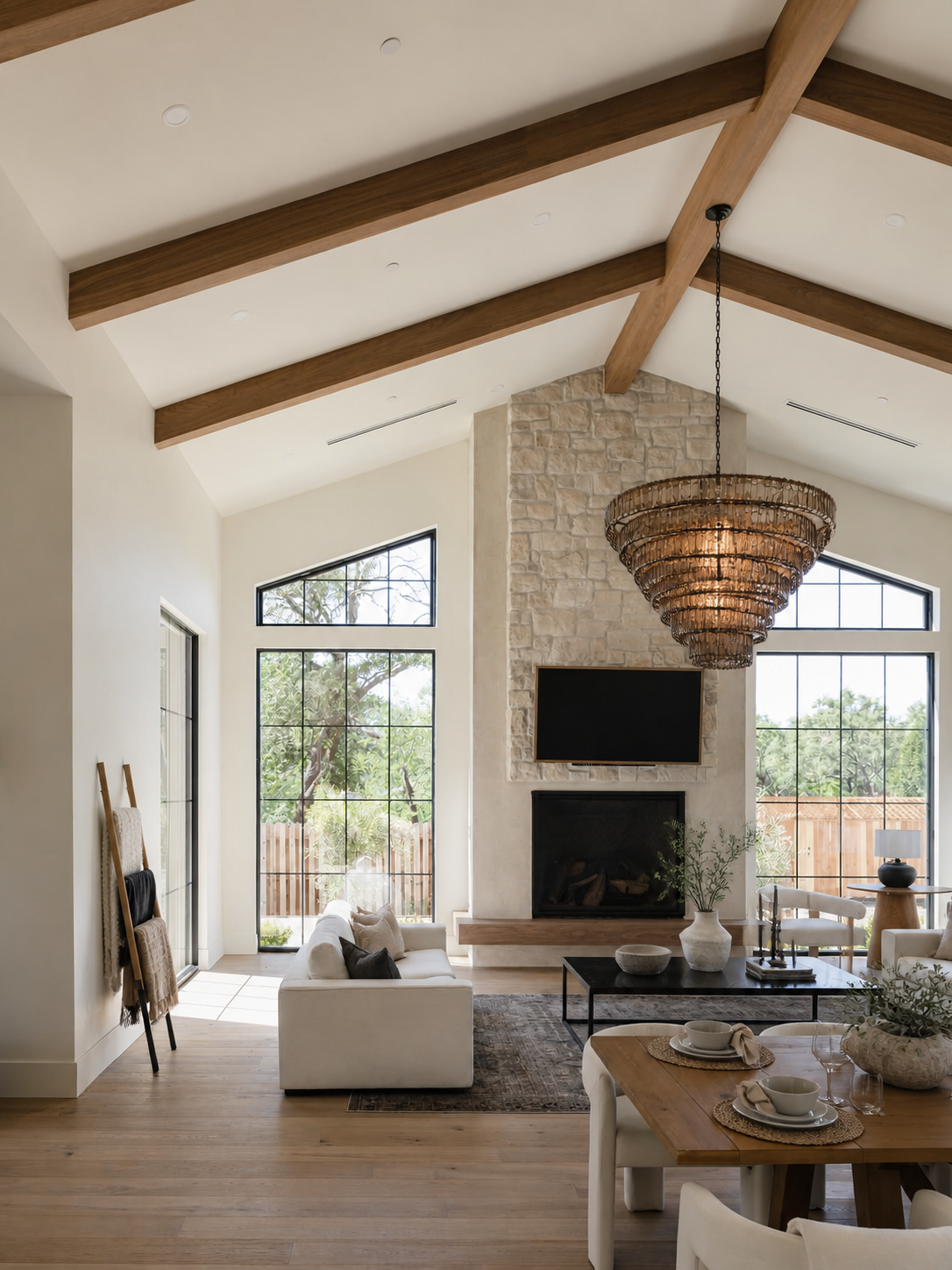
Start With the Home Not the Product
Before comparing pieces, start with the house itself. A suburban single-family home, a townhouse, a lake house, and a new-build home with an open floor plan can all need different furniture decisions. Room size, ceiling height, stair turns, doorways, built-in features, windows, fireplaces, and traffic paths all affect what will actually work.
Lifestyle matters just as much. A family with children may need durable upholstery, easy-to-clean dining chairs, stronger storage, and a sectional that supports daily use. A couple furnishing a vacation home may care more about a complete move-in plan, guest bedrooms, and low-maintenance materials. A homeowner who entertains often may need a larger dining table, better bar storage, and a living room layout that handles more people comfortably.
This is where many furniture mistakes begin. A piece can look beautiful online, but still be wrong for the room. It may block a walkway, sit too low under a tall ceiling, leave awkward gaps beside a wall, or fail to provide the storage the home actually needs.
Where Ready Made Furniture Works Well
Ready-made furniture works well when the room is straightforward and the piece does not need to solve a specific problem. Side tables, simple nightstands, accent chairs, benches, lamps, rugs, and decorative accessories can often be selected from existing collections without losing the overall design.
It is also useful when timing matters. If a guest room needs to be ready before family visits, or a new home needs basic furniture soon after closing, ready-made pieces can help the project move faster. In-stock or standard-size items can be especially helpful for secondary bedrooms, casual spaces, home offices, and short-term furnishing needs.
Ready-made furniture gives homeowners a clear price before purchase. This makes it easier to compare options, control spending, and fill the parts of the home where exact sizing is less critical.
Where Ready Made Furniture Can Fall Short
The main weakness of ready-made furniture is that the home has to adapt to the product. The size, fabric, wood tone, seat depth, table length, cabinet interior, and finish are usually fixed. If the piece is almost right but not quite right, the room may still feel unresolved.
This often happens in American open-plan homes. A standard sofa may be too small for a large family room, while an oversized sectional may block the path between the kitchen and living area. A dining table may seat the right number of people but feel too short under a large chandelier. A media console may fit the TV but look too low on a long wall.
Storage is another common issue. A ready-made cabinet may leave unused space above or beside it. A wardrobe may not match the closet problem. A mudroom bench may look nice but not hold shoes, bags, coats, sports gear, and everyday clutter in a useful way.
What Custom Furniture Does Better
Custom furniture is strongest when fit matters. It can be made for the exact wall length, ceiling height, room proportion, storage need, fabric preference, wood tone, or design direction. This does not mean every item must be fully custom. Sometimes a semi-custom change, such as adjusting a sofa length or choosing a different finish, is enough.
Custom furniture also helps when a home needs a more cohesive look. In a whole-home furnishing project, the living room, dining room, primary bedroom, entryway, kitchen-adjacent storage, and home office should not feel like separate purchases from different places. Coordinated materials and proportions make the house feel planned.
The tradeoff is that custom furniture requires more decisions. Measurements, drawings, finish samples, fabric choices, production time, delivery, and installation all need attention. For the right pieces, that planning creates a better result than forcing a standard item into a room where it does not belong.
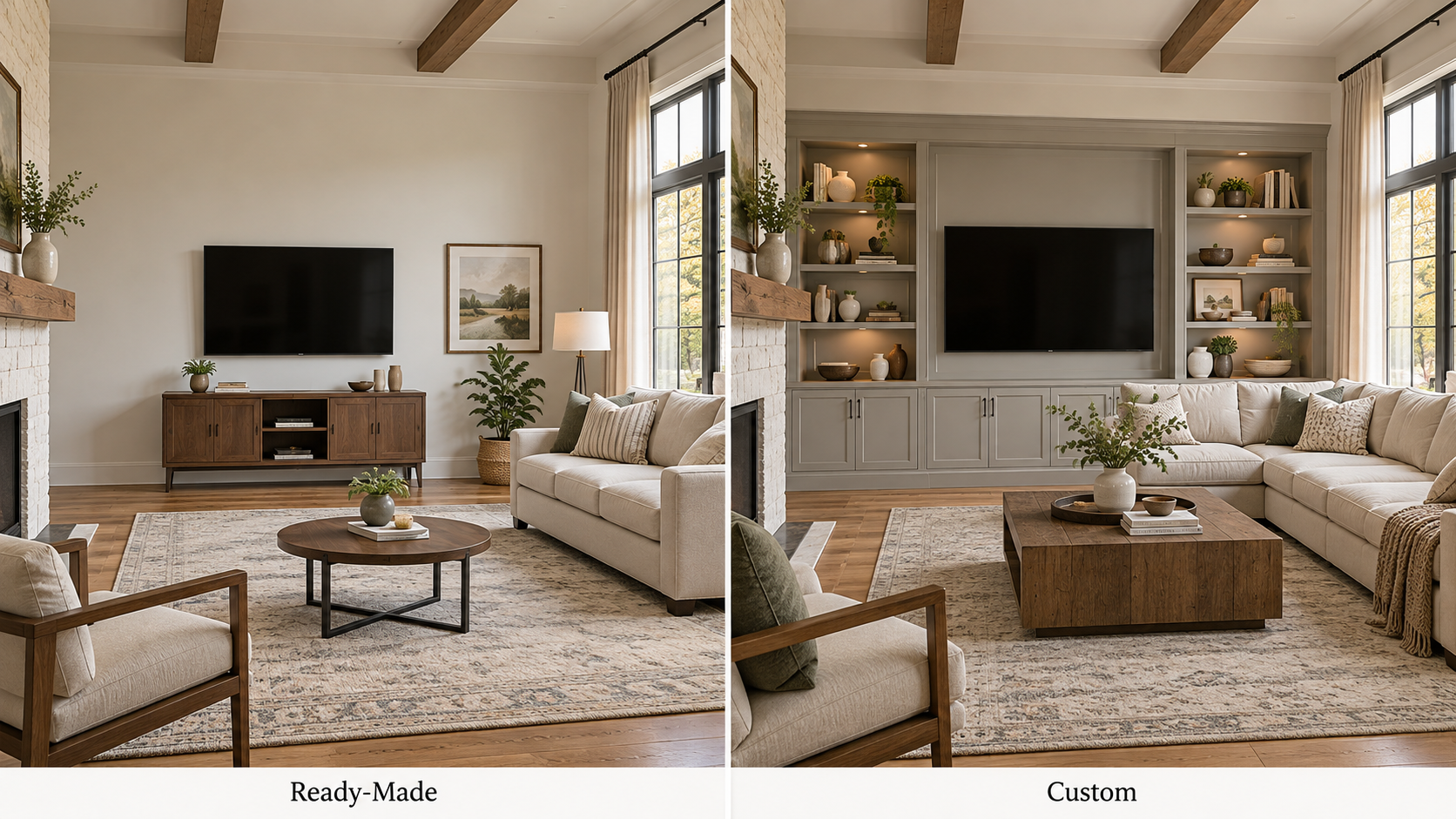
American Home Spaces Where Custom Often Pays Off
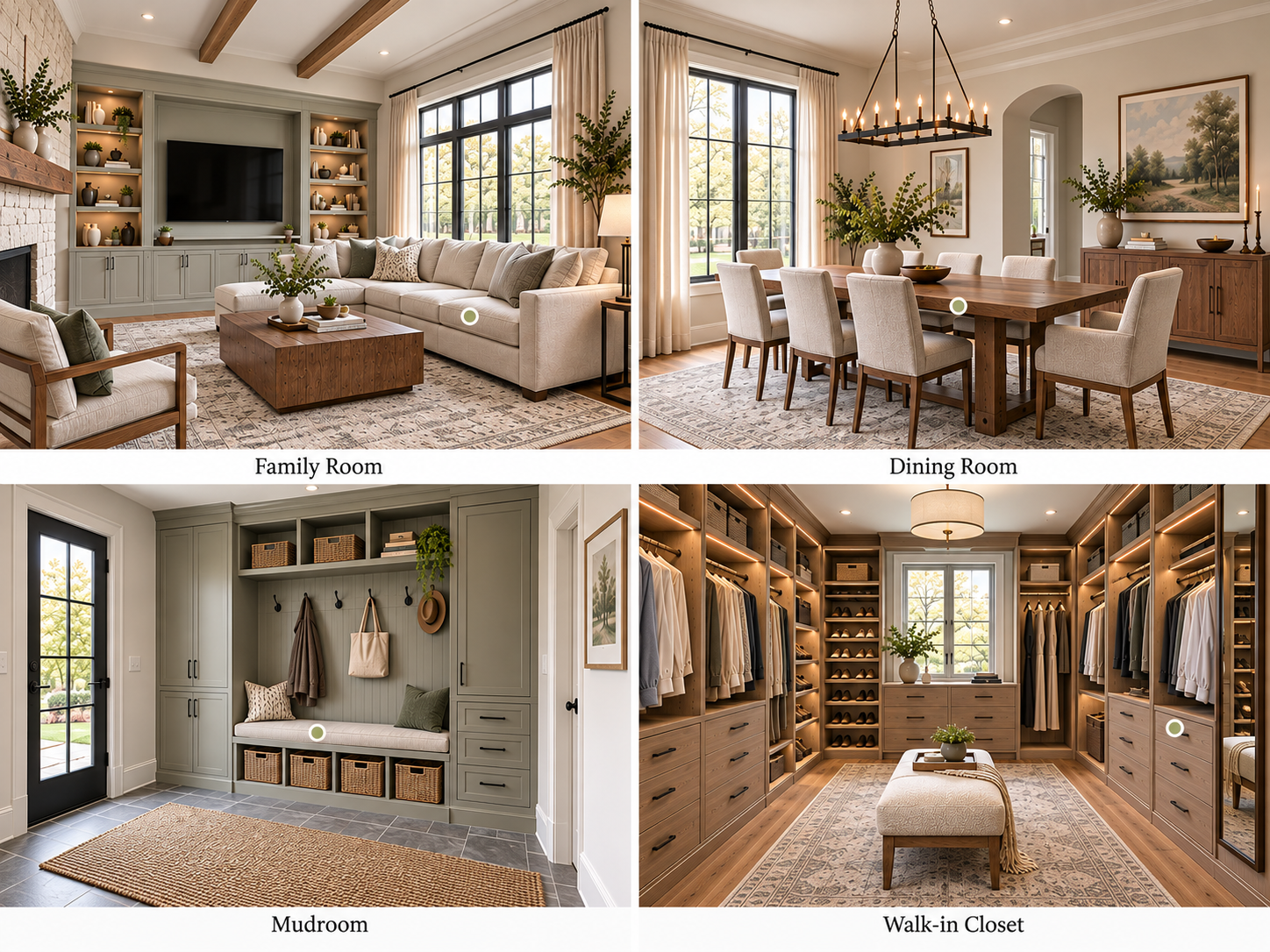
Custom furniture is often worth considering for the main living room or family room, especially when the space is large, open, or connected to the kitchen. A custom-size sofa or sectional can make the seating area feel intentional instead of floating awkwardly in the room.
Dining rooms are another strong candidate. Many American homes need tables that work for both everyday meals and holiday gatherings. A custom or semi-custom dining table can help balance seating capacity, room size, chair clearance, and the scale of pendant lighting.
Primary bedrooms, mudrooms, walk-in closets, media walls, kitchen cabinets, pantry storage, laundry rooms, and built-in office areas are also common places where customization can pay off. These spaces are not only about appearance. They need to support storage, routines, and daily movement through the house.
Pieces That Usually Do Not Need to Be Custom
Not every piece deserves custom attention. Guest room nightstands, simple side tables, occasional chairs, small lamps, stools, decorative benches, mirrors, and many rugs can often be ready-made. These pieces support the room but usually do not define whether the space functions well.
Ready-made pieces are also helpful when the homeowner wants flexibility. A nursery may become a child bedroom later. A home office may become a guest room. A basement lounge may change as the family grows. In flexible rooms, it can make sense to avoid over-customizing too early.
The best plan protects custom investment for anchor pieces and practical storage, then uses ready-made pieces to complete the room with less pressure on the budget.
Compare the Total Result Not Only the Price Tag
A ready-made piece often looks cheaper because the price is visible immediately. A custom piece may include planning, measurement, materials, production, delivery, and installation. To compare fairly, look at the total result, not only the first number.
For example, a ready-made storage cabinet may cost less, but if it leaves large gaps, does not reach the right height, or requires extra pieces to make the wall feel complete, the room may still need more spending later. A custom built-in may cost more upfront, but it can use the wall better and reduce the need for additional furniture.
Returns and replacements also matter. Large furniture is not always easy to return, especially after delivery, assembly, or white-glove service. A piece that is the wrong size can cost time, delivery fees, and frustration. Measuring carefully before buying is part of the real budget.
Think About Delivery Access and Installation
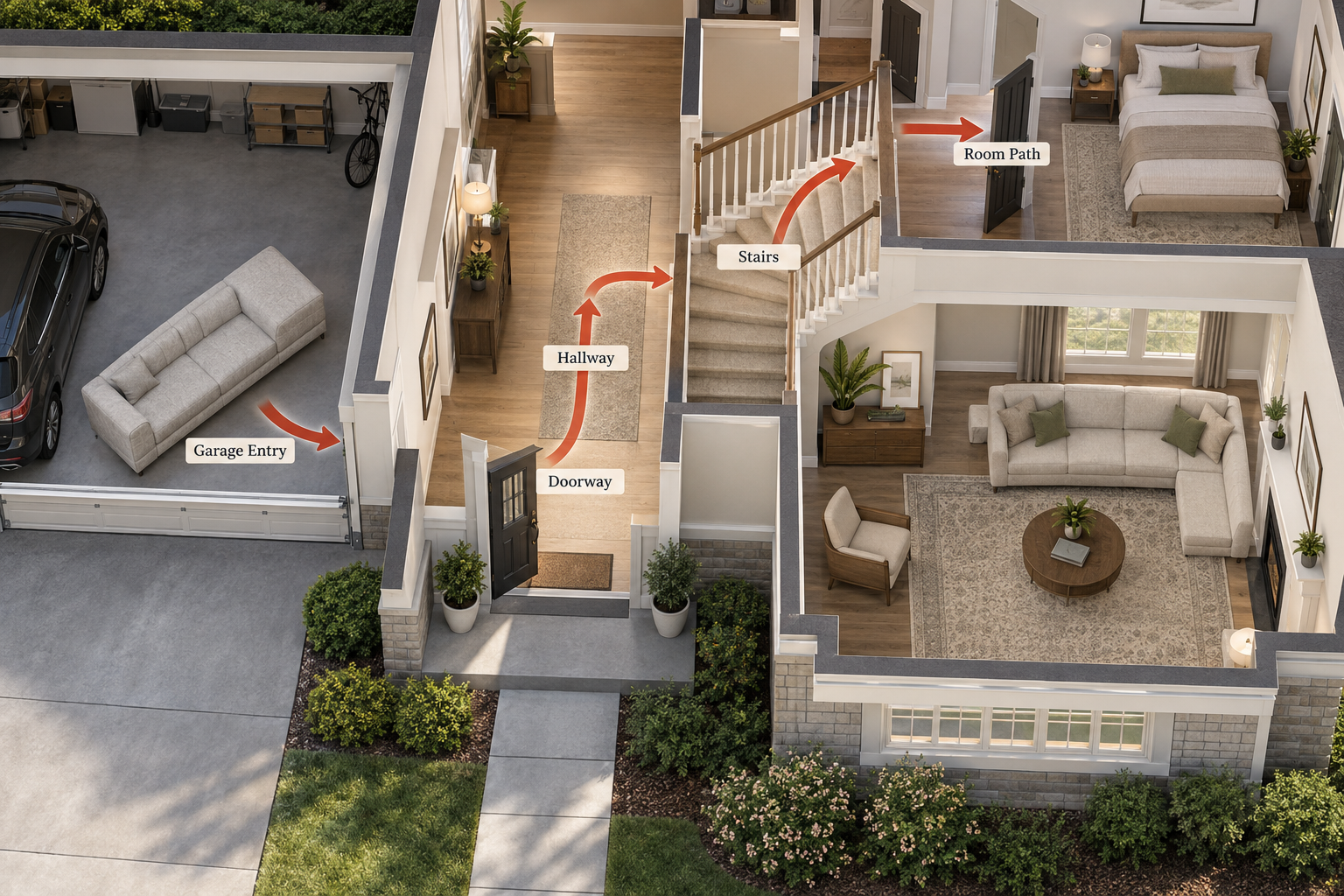
American homes often have details that affect furniture delivery: garage entries, front steps, narrow hallways, stair turns, second-floor bedrooms, basement family rooms, and large open rooms with limited wall space. Before ordering any large piece, it is important to measure not only the room, but also the path into the room.
Ready-made furniture can be difficult if a sofa, bed frame, table, or cabinet cannot pass through the doorway or stairwell. Custom furniture can sometimes be planned in sections, which makes delivery and installation easier. Built-ins also need wall conditions, outlets, baseboards, vents, and floor levels to be considered.
This is especially important for media walls, wardrobes, mudroom cabinets, large sectionals, long dining tables, and upstairs bedrooms. A good furniture plan should account for how the piece will arrive, not only how it will look in the final photo.
Choose Materials Based on Daily Use
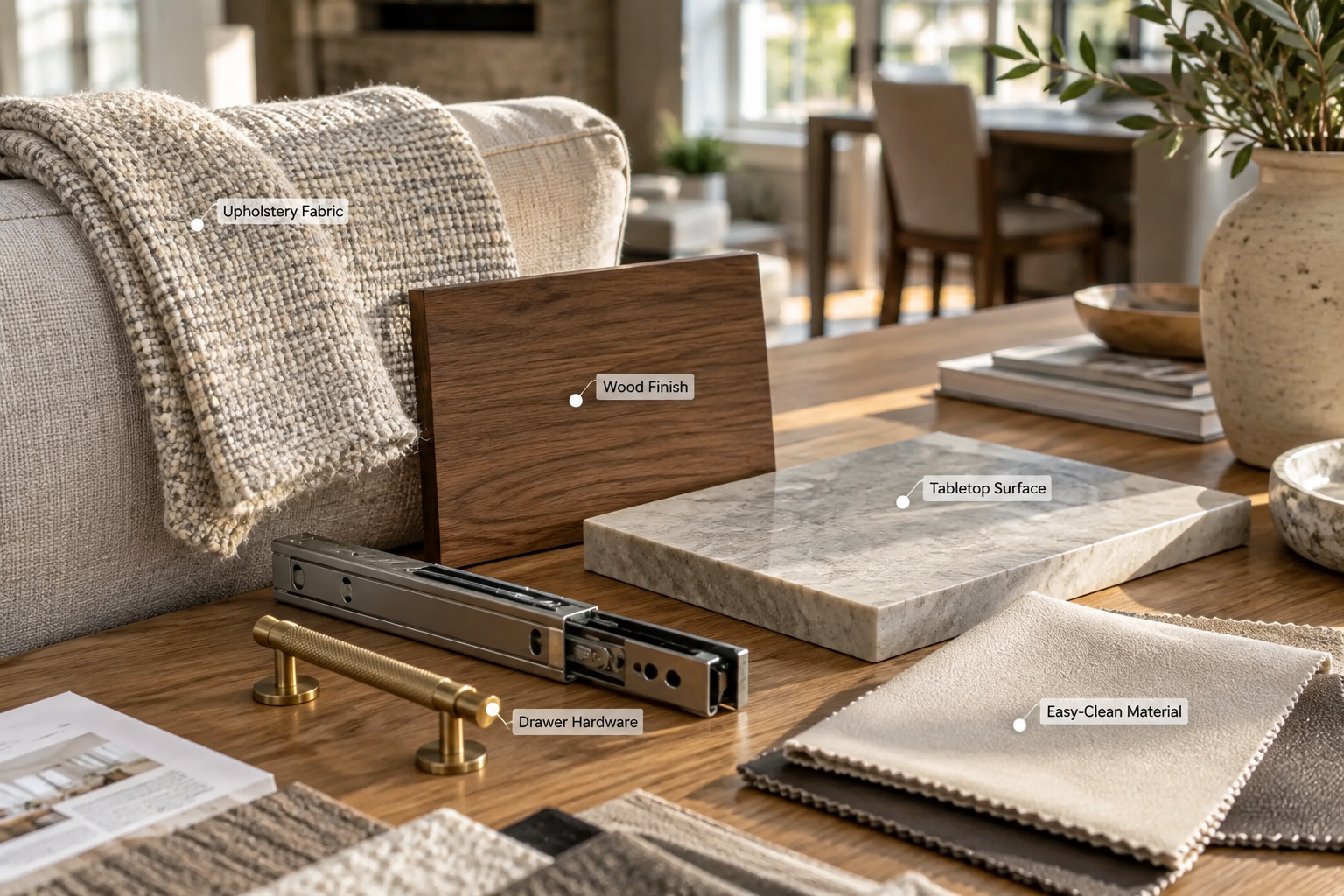
Material choice should match how the home is used. A family room sofa needs different performance than a formal sitting room. A breakfast table used every morning needs more durability than a decorative console. A mudroom cabinet has to handle shoes, bags, moisture, and daily traffic.
Ready-made furniture can be a good choice when the available materials already match the use. Custom furniture gives more control when the room needs a specific fabric, wood finish, stain resistance, cushion feel, tabletop size, cabinet interior, or hardware quality.
For American households with children, pets, frequent guests, or open kitchen-living spaces, durability often matters as much as appearance. The best-looking room will not feel successful if the materials are too delicate for the way the home is lived in.
A Practical Room by Room Approach
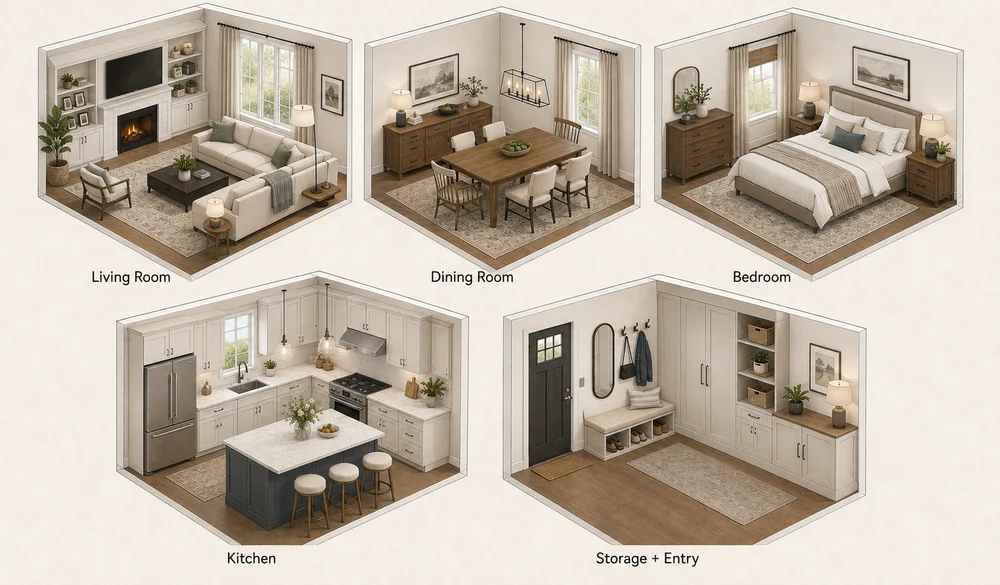
In the living room, consider custom for the main sofa, sectional, media wall, or built-in storage, then use ready-made side tables, lamps, and accent chairs where they fit. In the dining room, consider custom or semi-custom for the table if seating capacity, length, or finish is important, while chairs may be ready-made if they are comfortable and durable.
In the primary bedroom, a custom bed, wardrobe, or built-in storage can help the room feel calm and complete. In guest bedrooms, ready-made beds, nightstands, and dressers may be enough unless the room has unusual dimensions.
In entries, mudrooms, laundry rooms, closets, and pantry areas, custom storage can solve real daily problems. These are the spaces where standard furniture often looks fine at first but does not actually organize the household.
Questions to Ask Before You Decide
Before choosing custom or ready-made furniture, ask what the piece needs to do. Does it define the room? Does it affect daily comfort? Does it solve storage? Does it need to fit a wall exactly? Will it be used every day? Will it be hard to replace later?
Also ask whether the room is permanent or flexible. A main living room, dining room, primary bedroom, kitchen cabinet system, or mudroom usually deserves more planning. A guest room, temporary office, or accessory layer can often stay more flexible.
Once those priorities are clear, the decision becomes much easier. Custom furniture is not automatically better, and ready-made furniture is not automatically less thoughtful. The right choice depends on the role each piece plays in the home.
Final Thoughts
For American homes, the best furniture plan usually combines both custom and ready-made pieces. Ready-made furniture helps with speed, flexibility, and budget control. Custom furniture helps with fit, proportion, storage, durability, and a more complete whole-home look.
The smartest approach is to customize the pieces that shape how the home works every day, then use ready-made pieces where standard sizes and finishes already solve the need.
For homeowners furnishing a new house, renovating several rooms, or planning a complete home setup, Arcaya can help decide which pieces should be custom, which pieces can be ready-made, and how both can work together in one cohesive plan.
How Much Does Whole Home Furnishing Cost? A Room-by-Room Planning Guide
Furnishing a whole home is more than buying a sofa, a bed, and a dining table. This room-by-room guide explains what affects...
Bed Size Guide: How to Choose the Right Bed for Your Bedroom
Choose the right bed size using mattress dimensions, full frame measurements, bedroom clearance, bed height, lighting, and wall art proportions.
How to Choose a Bed Frame That Looks Beautiful and Lasts
A practical Arcaya buying guide for bed frame materials, slats, headboards, hardware, storage beds, and bedroom planning.