A beautiful bed should make a bedroom feel easier to live in, not harder to move through. Yet many people choose a bed by mattress size alone, then discover the frame is wider than expected, the nightstands no longer fit, or the walkway at the foot of the bed feels tight every morning.
Today at Arcaya, we are turning a simple bed-size note into a complete bedroom planning guide. The goal is not to choose the biggest bed possible. The goal is to choose the bed that gives you comfort, proportion, and smooth daily movement.
1. Start With the Room, Not the Mattress
The most common mistake is starting with a mattress size and trying to force the room around it. A better process is:
- Measure the bedroom first
- Choose a realistic bed width
- Check the bed frame's full outside dimensions
- Reserve walkway clearance on both sides and at the foot
- Confirm the bed height, headboard height, lighting, and wall art placement
This sequence keeps the room functional. A king bed may sound luxurious, but if it blocks closet doors or leaves only a narrow path around the room, the bedroom will feel less restful in daily use.
Arcaya idea: A well-sized bed is not simply large. It is large enough for sleep and small enough to let the bedroom breathe.
2. Understand Inner Size and Outer Size
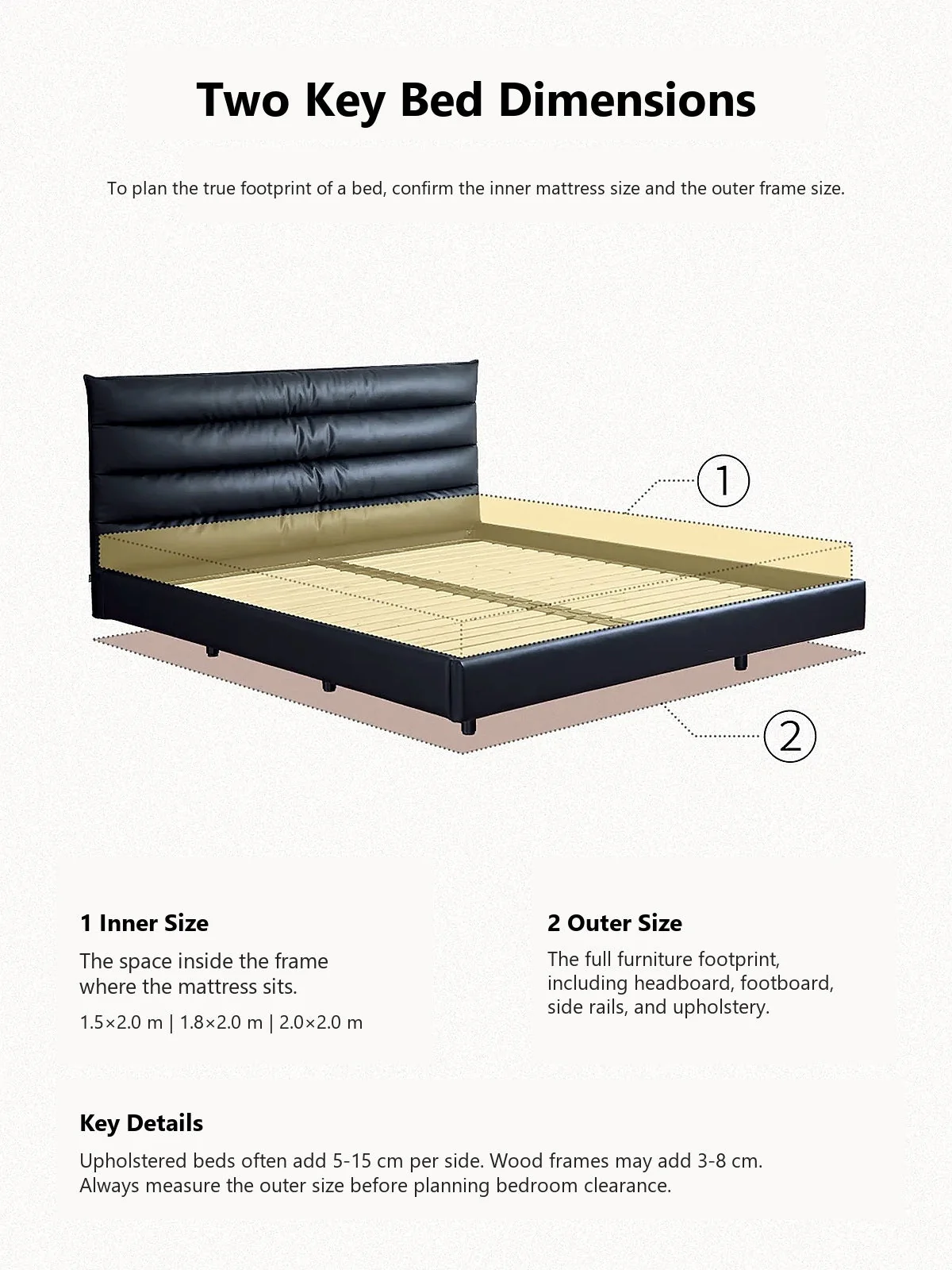
When a bed is described as Queen, King, or California King, that usually tells you which mattress it accepts. It does not always tell you the total footprint of the bed frame.
The inner size is the mattress fit area. This is the space inside the frame where the mattress sits.
The outer size is the full furniture dimension. It includes the side rails, upholstered edges, headboard depth, footboard, curved corners, and any decorative overhang.
For a slim wood platform bed, the outside dimension may only add a few inches. For an upholstered bed, the frame can add more because padding, seams, and rounded corners take up extra room. Storage beds and statement headboards may add even more depth.
Before buying, look for the product's overall width, overall length, and headboard depth. If the product page only lists mattress size, ask for the outside measurements.
Arcaya idea: Measure the bed as furniture, not only as a mattress. The outside dimension is what the room actually has to hold.
3. Match Bed Width to Bedroom Size
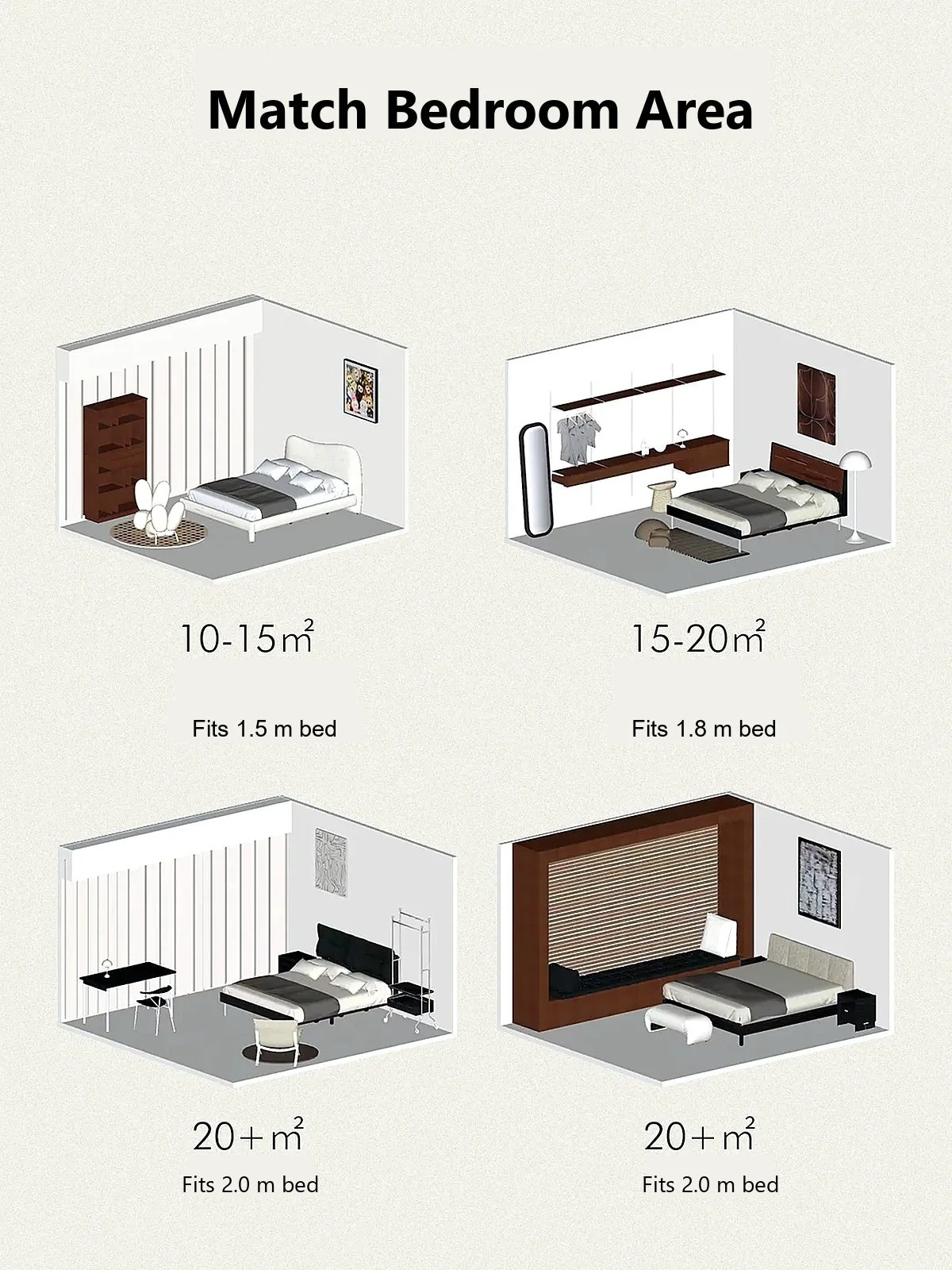
Room size should guide the bed width. The ranges below are practical planning references, not rigid rules. Door placement, closet access, window walls, and built-ins can change what works.
For a compact bedroom around 108 to 160 square feet, or 10 to 15 square meters, a Full or Double bed is often the easiest fit. A Queen can work if the room has a simple shape, minimal furniture, and careful nightstand planning.
For a standard primary bedroom around 160 to 215 square feet, or 15 to 20 square meters, a Queen bed is usually the most flexible choice. A King can work when the room is wider, the closet doors do not compete with the bed, and there is enough space for movement on both sides.
For a larger bedroom over 215 square feet, or 20 square meters, a King or California King can feel proportionate. In a generous room, the bed should still be balanced with nightstands, lighting, seating, or cabinetry so it does not float without context.
Arcaya idea: The right bed size should make the room feel intentionally planned. The bed, nightstands, lighting, and storage should read as one calm composition.
4. Know the Common Mattress Sizes
Here are the most common North American mattress sizes to keep in mind:
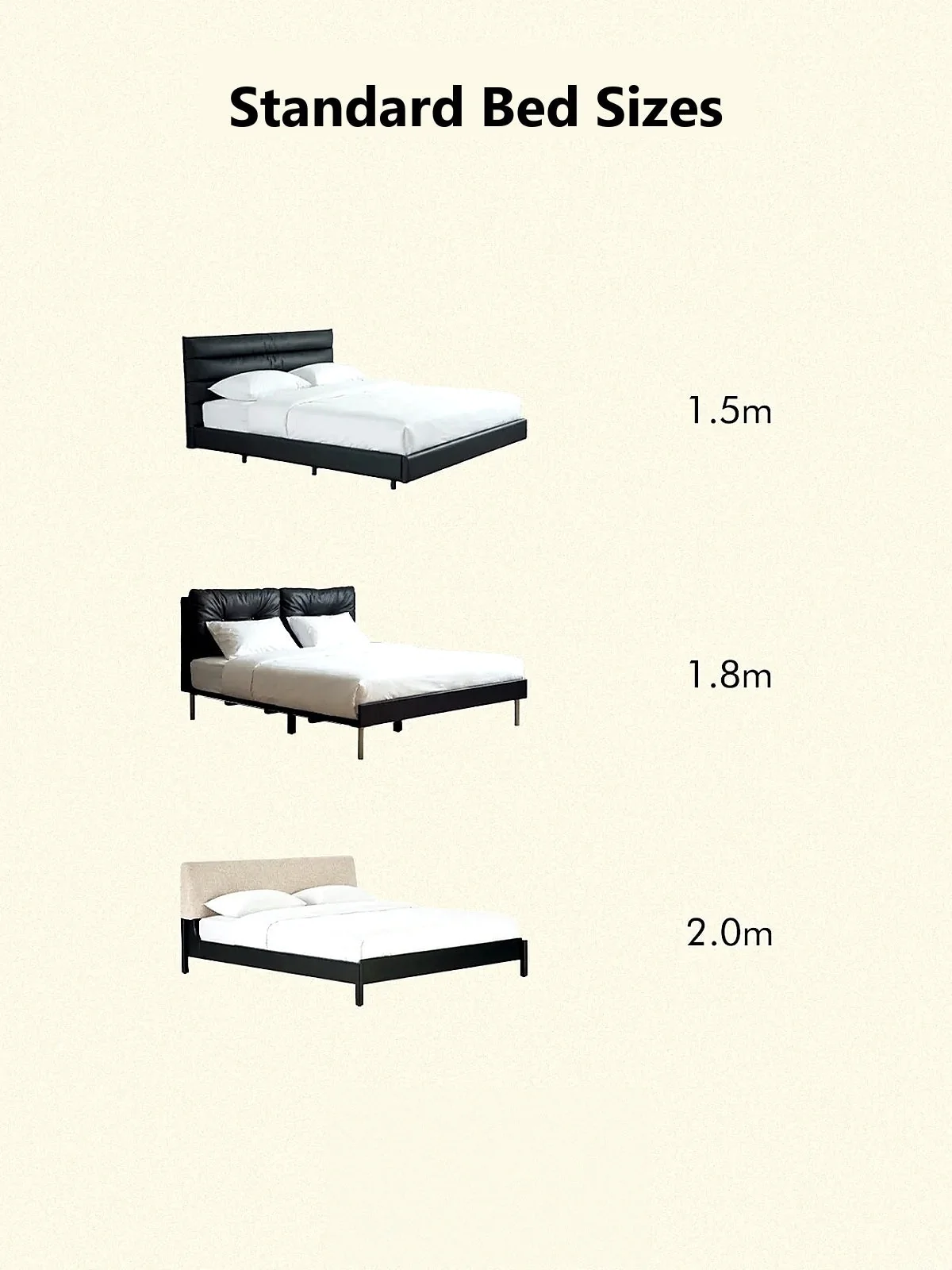
| Mattress size | Approximate dimensions | Best for |
|---|---|---|
| Twin XL | 38 x 80 in | One person, small rooms, guest rooms |
| Full / Double | 54 x 75 in | One person who wants more room, compact guest bedrooms |
| Queen | 60 x 80 in | Most couples, standard primary bedrooms |
| King | 76 x 80 in | Couples who want more width, larger primary bedrooms |
| California King | 72 x 84 in | Taller sleepers or long, narrow rooms |
If you are comparing international furniture sizes, a 1.5 m bed is close to a Queen in width, a 1.8 m bed sits between a Queen and King, and a 2.0 m bed is larger than a standard King width. Always confirm the exact mattress and frame measurements because sizing systems vary by market.
Arcaya idea: Use mattress size as the comfort baseline, then use the frame's outside size as the design decision.
5. Plan the Walkways Before You Buy
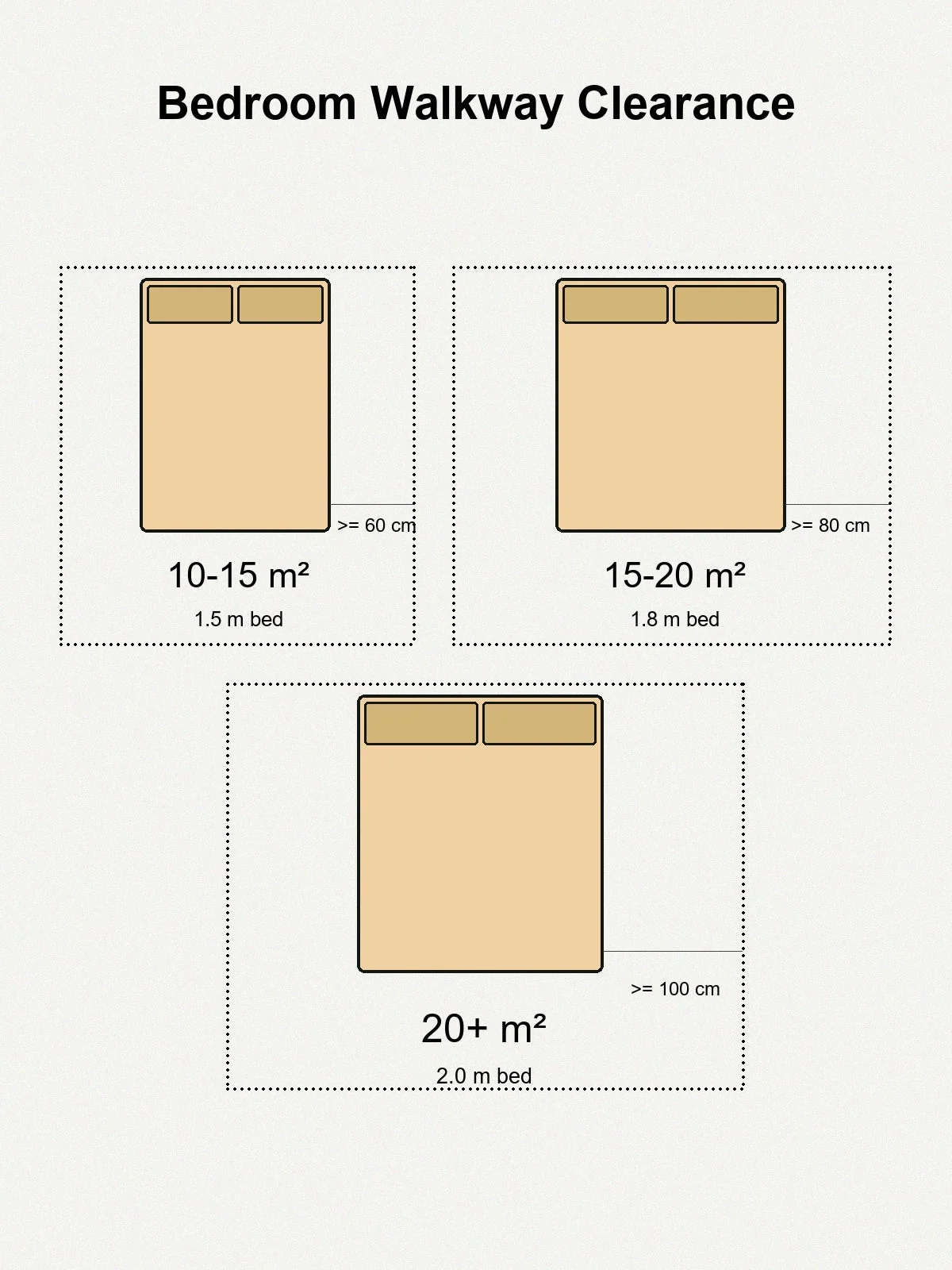
Clearance is what makes a bedroom feel comfortable after the furniture arrives. If possible, leave about 24 to 36 inches of walkway on each side of the bed. Around 24 inches can work in a smaller room, while 30 to 36 inches feels more comfortable for two people sharing the space.
At the foot of the bed, plan for around 30 to 36 inches when possible. This is especially important if there is a dresser, bench, closet, or bathroom door nearby.
Do not forget these hidden measurements:
- Closet door swing
- Bedroom door swing
- Drawer depth when opened
- Nightstand width
- Outlet and switch locations
- Rug size under the bed
- Curtain movement near windows
If your clearance is tight, consider a slimmer bed frame, smaller nightstands, wall-mounted sconces, or a Queen instead of a King. These small changes often make the bedroom feel more expensive because the layout becomes calmer.
Arcaya idea: A little empty space is part of the design. Walkways are not wasted space; they are what make the room feel graceful.
6. Use a Simple Measurement Formula
Before you place an order, test the layout with a simple calculation:
Room width minus outer bed width equals total side clearance. Then divide that number between the left and right sides of the bed.
For example, if a room is 132 inches wide and the bed frame is 82 inches wide, you have 50 inches left. Split evenly, that gives you 25 inches on each side before nightstands. If each nightstand is 22 inches wide, the layout may become tight. In that case, you might choose narrower nightstands, one larger nightstand and one smaller table, or a slightly slimmer bed frame.
Do the same for the room length:
Room length minus outer bed length equals the remaining space at the foot of the bed and behind the headboard.
This matters when the bed has a thick upholstered headboard, a footboard, or a bench at the end.
Arcaya idea: The tape measure is a design tool. A few minutes of measuring can prevent years of awkward movement.
7. Choose a Comfortable Bed Height
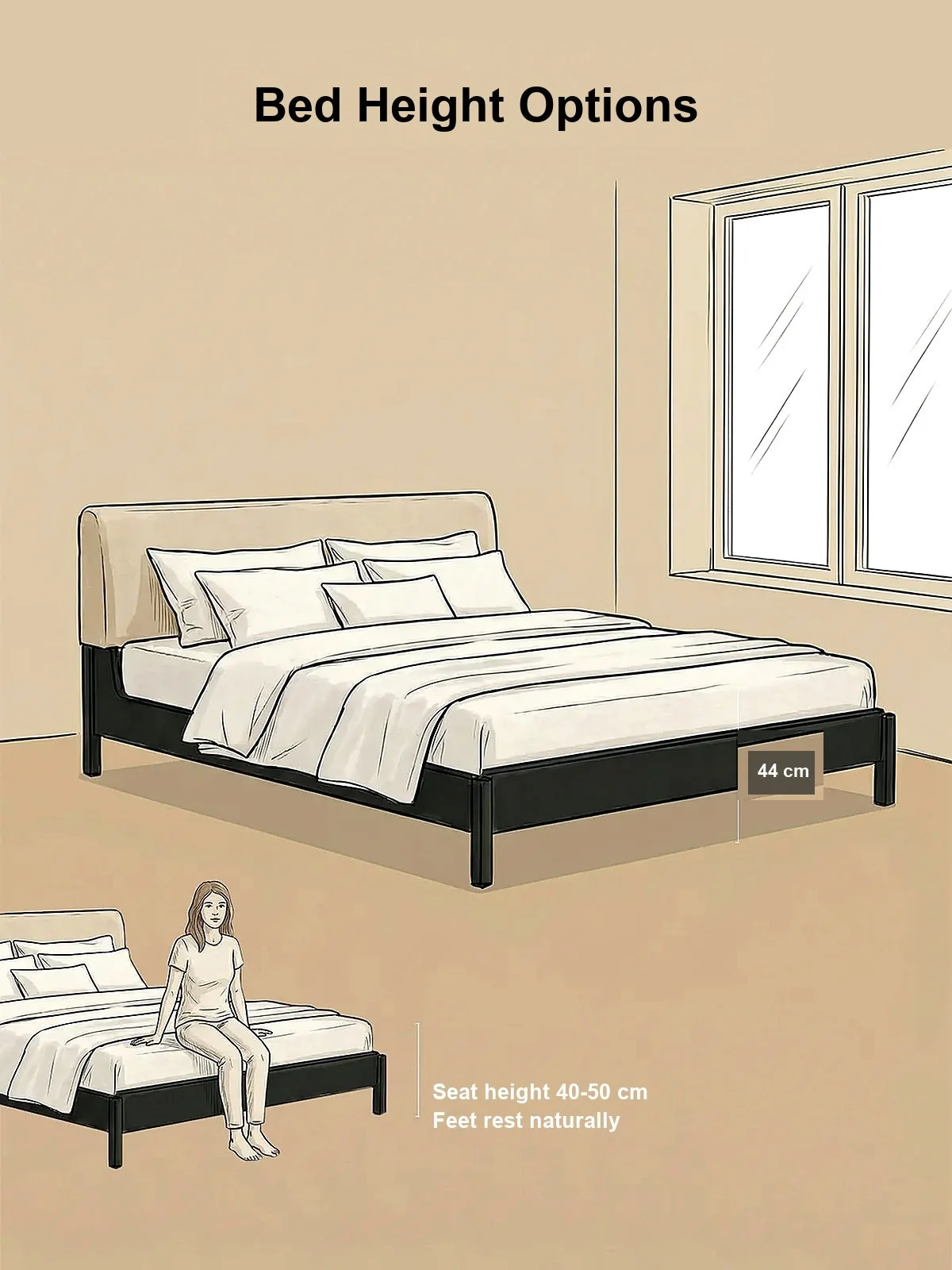
Bed height affects comfort more than people expect. A practical reference is about 16 to 20 inches from the floor to the top of the mattress. For many adults, this lets the feet rest naturally on the floor when sitting on the edge of the bed.
The ideal height depends on the person using the room, mattress thickness, and bed style. A low platform bed can feel calm and modern, but it may be harder to stand up from. A very tall bed can feel layered and traditional, but it may look heavy in a compact room.
If you are choosing a bed for a guest room, aim for a height that feels easy for different ages and body types. If the room has a thick mattress topper, include that in the final measurement.
Arcaya idea: The bed should feel good at the beginning and end of the day. Comfort is not only about lying down; it is also about sitting, standing, making the bed, and moving around it.
8. Check Headboard, Lighting, and Wall Art Proportions
The bed is usually the visual anchor of a bedroom, so the vertical measurements matter too.
A taller headboard can create a strong focal point, especially in a large primary bedroom. A lower headboard can make the room feel more relaxed and open, especially under windows or in a smaller space.
For lighting, consider ceiling height and where people walk. In standard-height bedrooms, flush or semi-flush ceiling lights often feel cleaner than a low hanging fixture. If you use a pendant or chandelier, make sure it does not create a sense of pressure above the bed or hang too low in a walking path.
For wall art above the bed, center height matters more than simply filling the wall. Keep the artwork visually connected to the headboard, and avoid hanging it so high that it feels detached from the bed.
Arcaya idea: A bedroom feels polished when the bed, headboard, lighting, and art share the same vertical rhythm.
9. Consider the Bed Frame Style
Once the size works, style becomes easier to choose.
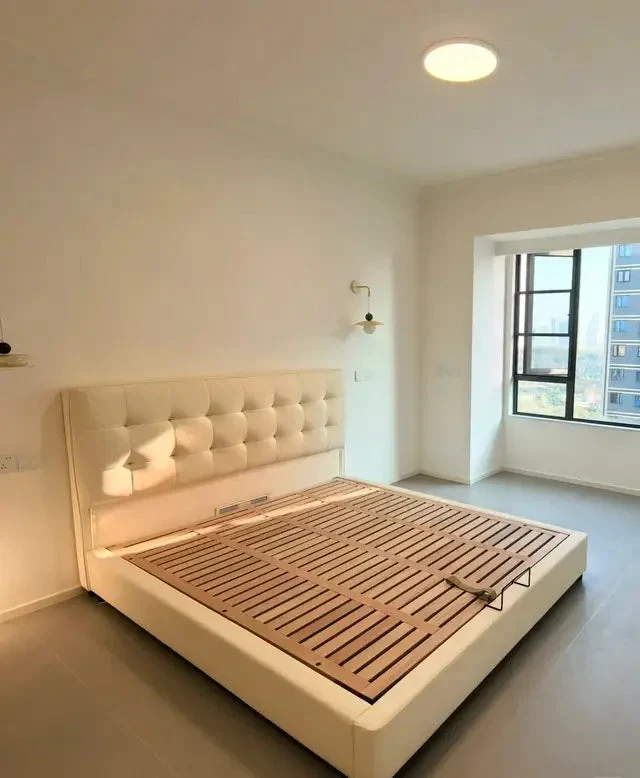
A slim platform bed is useful when the room is compact and you want to preserve visual space. An upholstered bed adds softness, which can make a bedroom feel quieter and more inviting. A solid wood bed brings warmth and a more architectural presence. A storage bed can solve a real closet problem, but it usually needs more planning because drawers or lift-up hardware require space to operate.
In a warm modern bedroom, Arcaya often looks for:
- Soft neutral upholstery
- Natural wood tones
- Rounded or gently eased edges
- Balanced headboard height
- Nightstands sized to the bed, not chosen separately
- Warm bedside lighting
- Enough negative space around the frame
Arcaya idea: The bed frame should support the room's atmosphere. Size gives the room order; material and shape give it feeling.
Quick Bed Size Checklist
Before buying a bed, confirm:
- Mattress size
- Outer bed frame width
- Outer bed frame length
- Headboard width, depth, and height
- Side clearance on both sides
- Foot clearance
- Nightstand dimensions
- Door and closet swing
- Outlet and switch locations
- Rug placement
- Final bed height with mattress included
If one measurement feels tight, adjust before purchasing. It is much easier to choose a slimmer frame or smaller nightstands now than to live with a cramped bedroom later.
Arcaya Takeaway
Choosing the right bed size is a balance of comfort, proportion, and movement. The mattress decides how much sleeping room you have. The bed frame decides how much bedroom space you actually use.
At Arcaya, we believe a good bedroom should feel calm from every angle: easy to enter, easy to move through, easy to wake up in, and easy to keep beautiful. Before choosing a bed, measure the room, check the frame's outer size, plan the walkways, and think about height. Those quiet details are what turn a bed from a large object into a well-designed center of the room.
Source note: Reference material adapted from online social media content. The public article diagrams in this package were recreated as Arcaya editorial graphics for bedroom planning education and interior inspiration only.