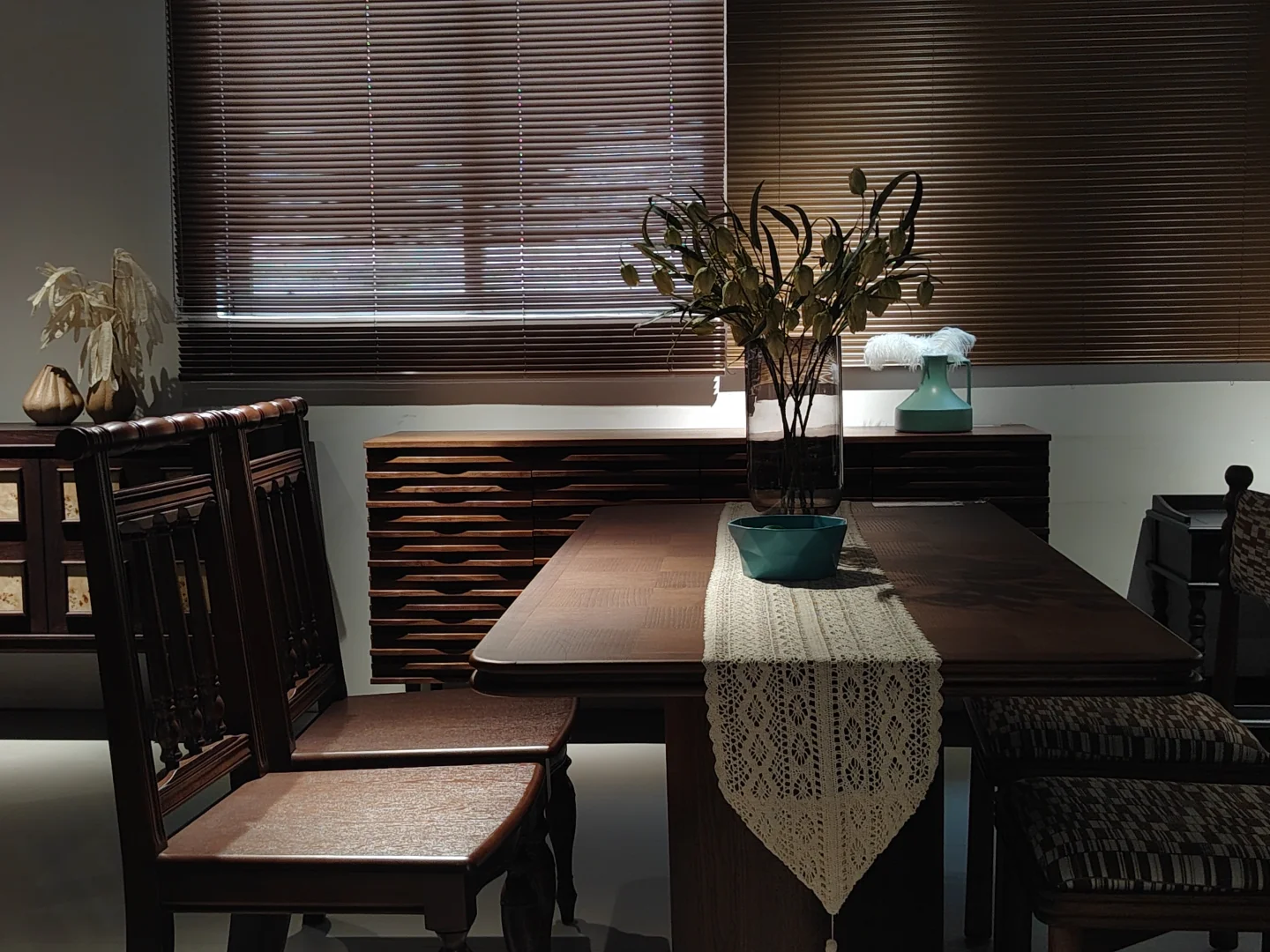
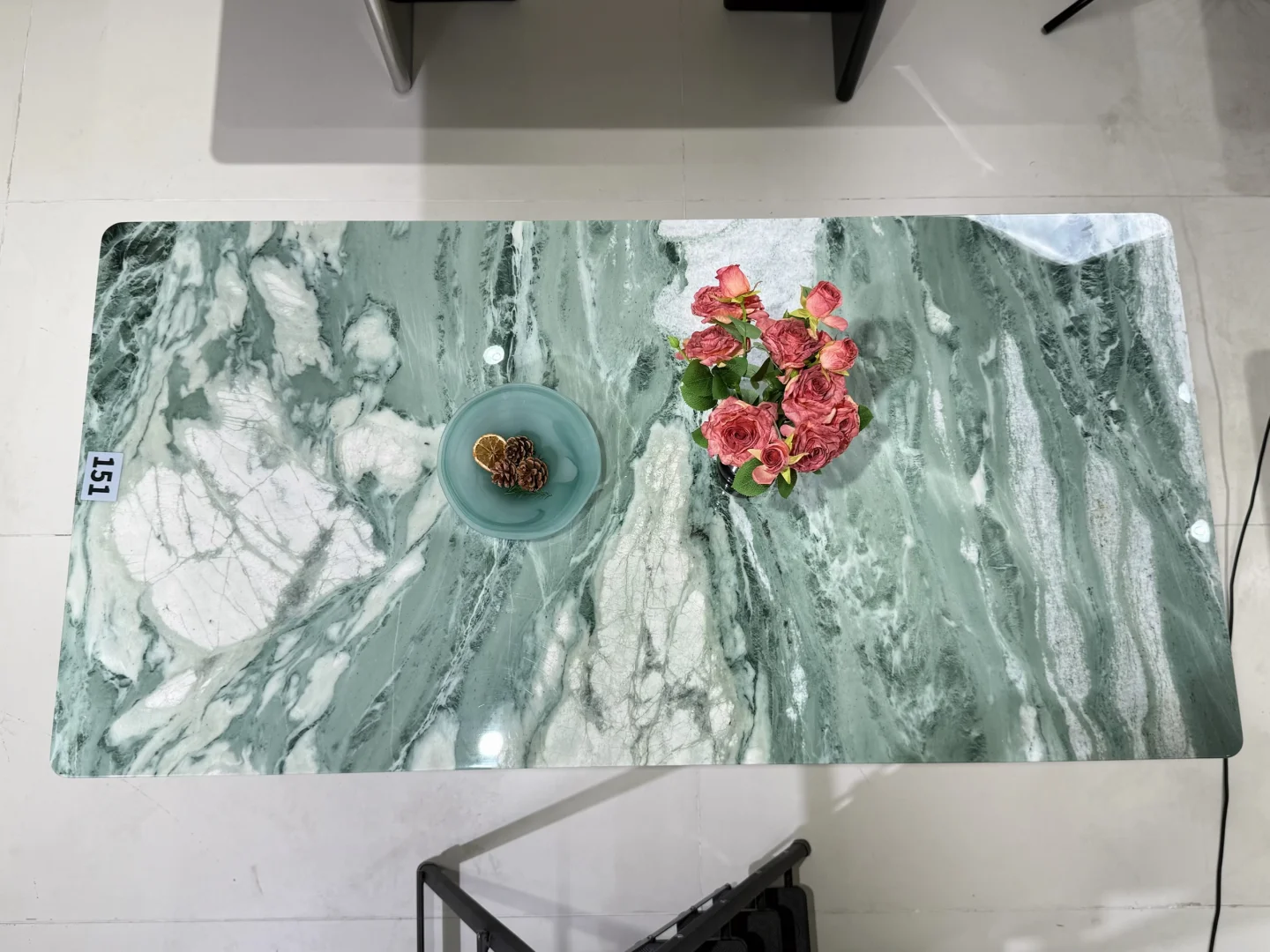
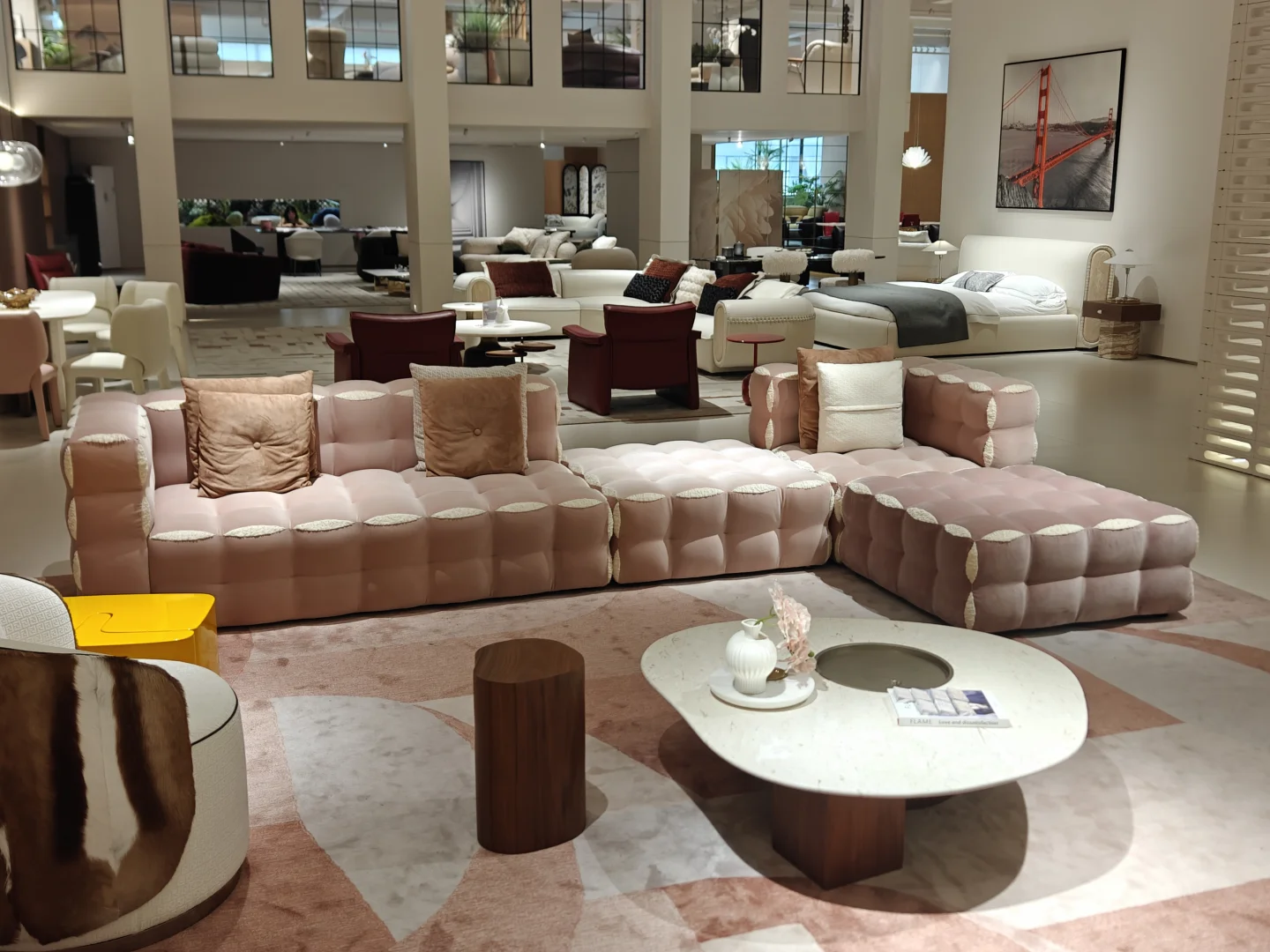
Three Ways to Source a One-Off Sideboard
An interior designer may need just one sideboard, with a very particular width, a rounded end, or a discreet pull. At Arcaya, we compare three routes against your dimensions and intended use. A standard piece may only need a different finish. An existing design can sometimes be resized. A custom build makes sense when the detail you need depends on a new drawing.
Describe an ordinary day with the sideboard
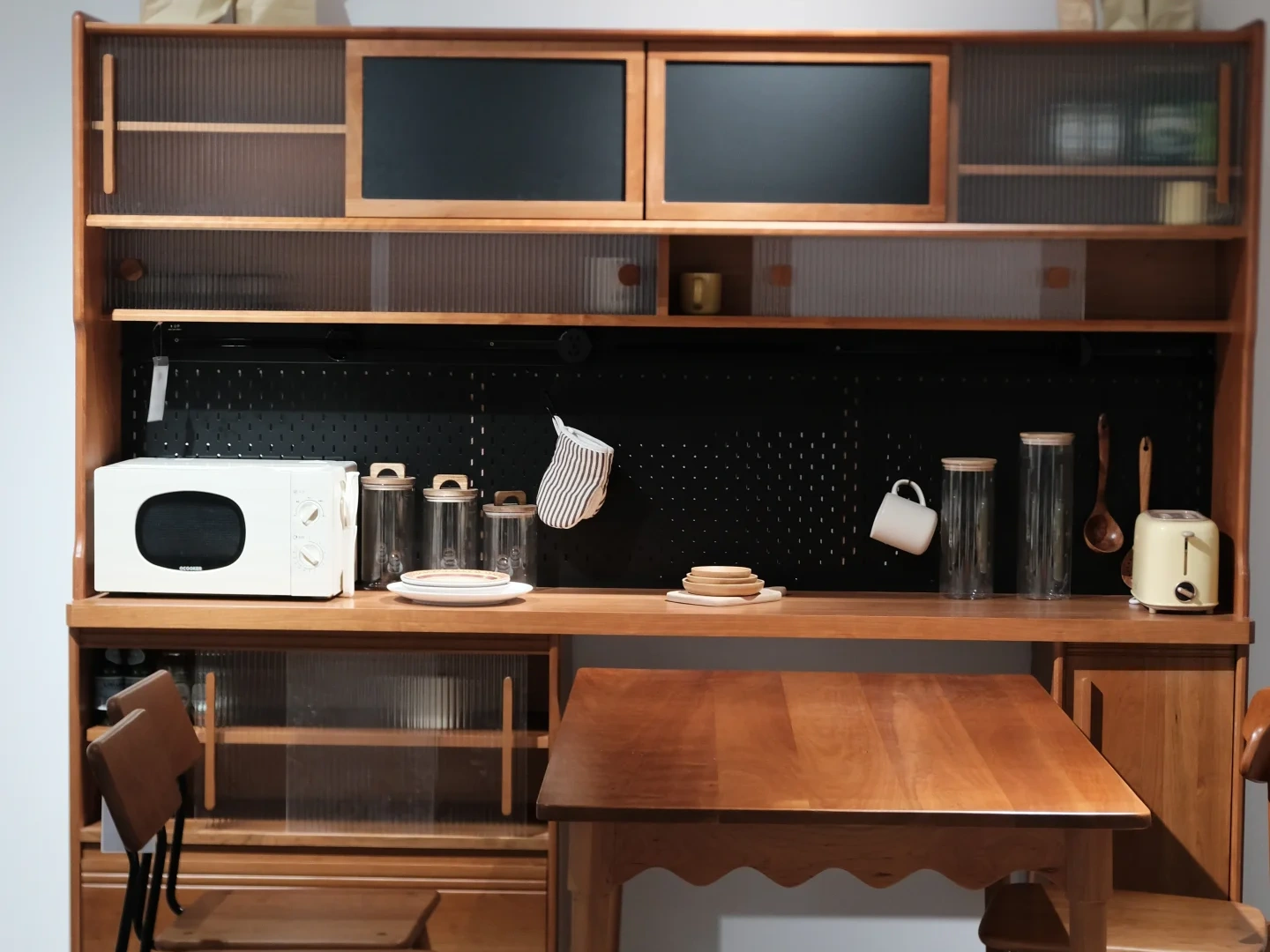
Send site dimensions, photos, and what the cabinet holds. For a coffee station, show the machine’s size with its lid open, where the cord exits, how the reservoir comes out, and the ventilation clearance the equipment needs. Identify outlets and overhead cabinets. If equipment sits directly on the floor, show its path in and the clear opening it needs.
Mark the details a client will see
Use the front and side elevations to identify the corner radius, door gaps, recessed pulls, and exposed wood. Mark features already approved and features you can change. If the brief simply calls for a soft silhouette, a standard cabinet with one rounded end may give you the effect.
Turn your equipment requirements into a cabinet section
Send the actual appliance model and mark the part that needs clearance, such as a lid, tank, cable, or tray. A top can be deep enough for the appliance footprint and still be too shallow after the plug and cable are in place. Ask for a section showing the back of the cabinet, the finished wall, and the appliance in use.
If heavy equipment needs to roll into a lower bay, draw the sill and open door in that position. Also check where a user stands to fill or clean it. Have the equipment and site teams verify any installation or ventilation requirements. Once that layout is agreed, you can specify a standard cabinet if it meets those conditions or give a custom maker a clear brief for what needs changing.
Look for a standard cabinet with a finish option
Check width, depth, clear opening, and door swing before discussing color. Ask whether another door finish or pull is available. Compare the standard piece and the modified finish with samples, prices, and lead times for each.
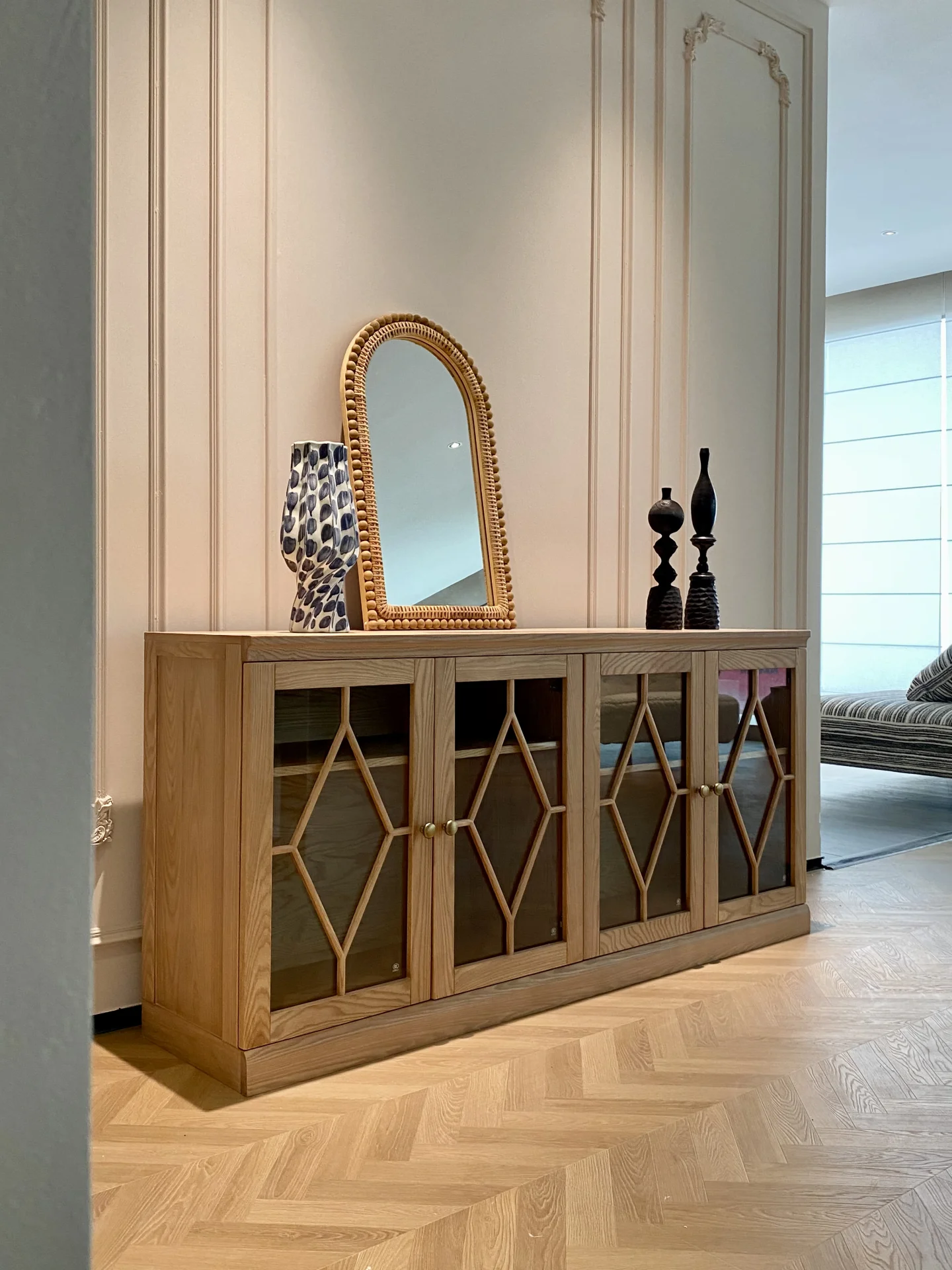
Ask what changes when an existing cabinet gets shorter
The maker could remove a bay and keep the doors, or narrow every door. That affects the layout, pulls, runners, and possibly the corner radius. Request side-by-side elevations and usable internal dimensions. If the face is meant to look continuous, ask where a seam will land when the cabinet is viewed from the dining table.
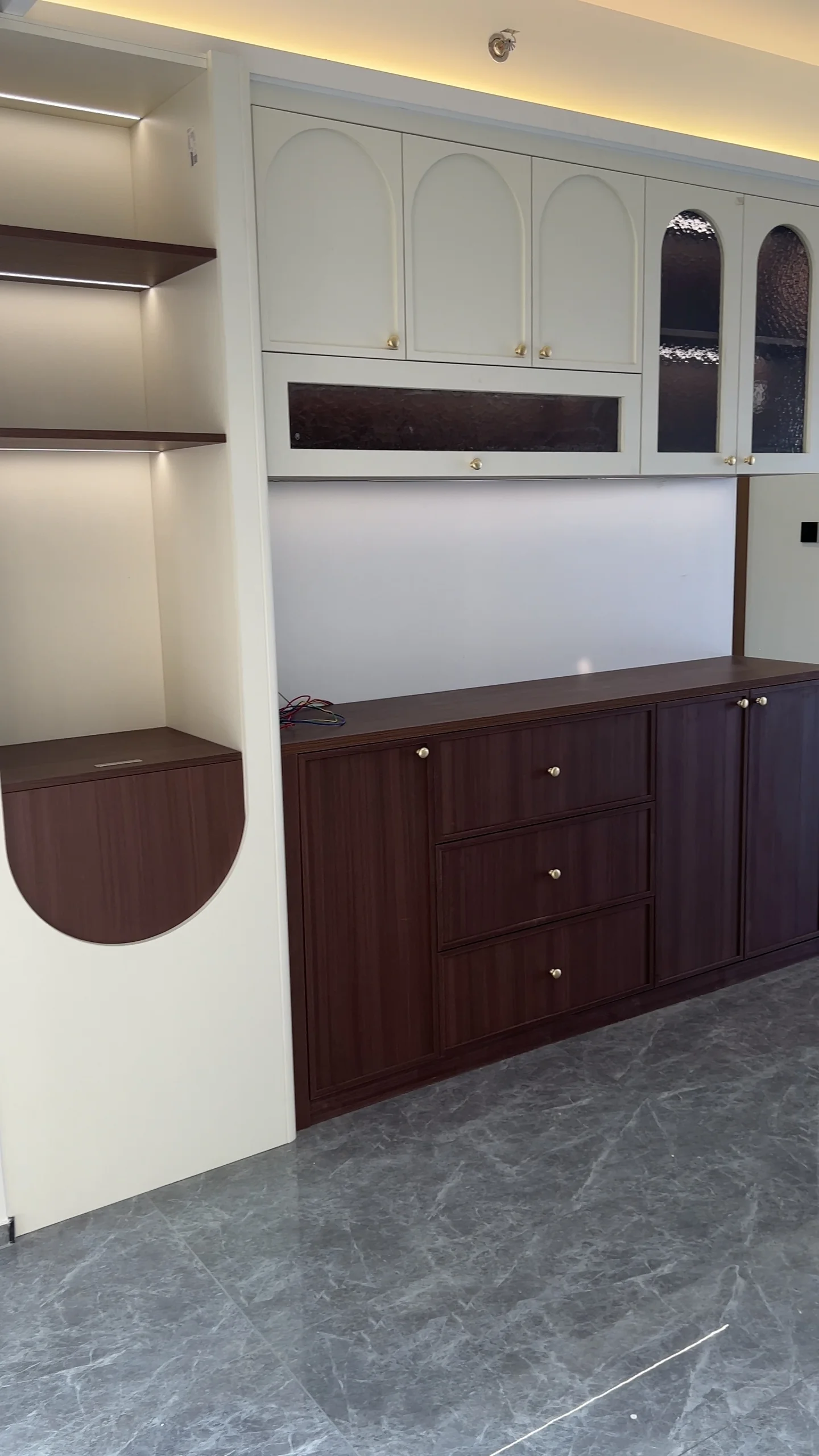
Check whether a maker will build a single piece
A portfolio of larger orders tells you little about minimums for one cabinet. Ask whether the factory accepts a one-off, can source the specified finish in that quantity, and charges for drawings or samples. Get those answers in writing before paying for detailed drawings.
Ask which parts of an existing design can be reused
Some standard cabinets adapt well because a shelf or door finish can change without altering the case. Others become a near-new design when the door sizes, curves, or hardware change. Ask the maker to mark which panels and fittings can stay, what has to be redrawn, and whether there is already an example of the change.
If you keep the two original doors and remove a narrow end bay, check how that shifts the symmetry and reduces storage. If every door gets smaller, inspect the available widths for hinges and drawers. A maker that can show the revised elevations and internal clearances gives you enough to decide whether one change retains what you liked about the catalog piece. Keep the confirmed new and reused parts on the same quote so the studio can see what it’s paying for.
Ask to see how the rounded section is made
Ask how the surface wraps the curve, where it joins the flat face, and which way the grain runs. If an unbroken look matters, request a photo of the same method or a sample that includes both the curve and the adjacent flat surface.
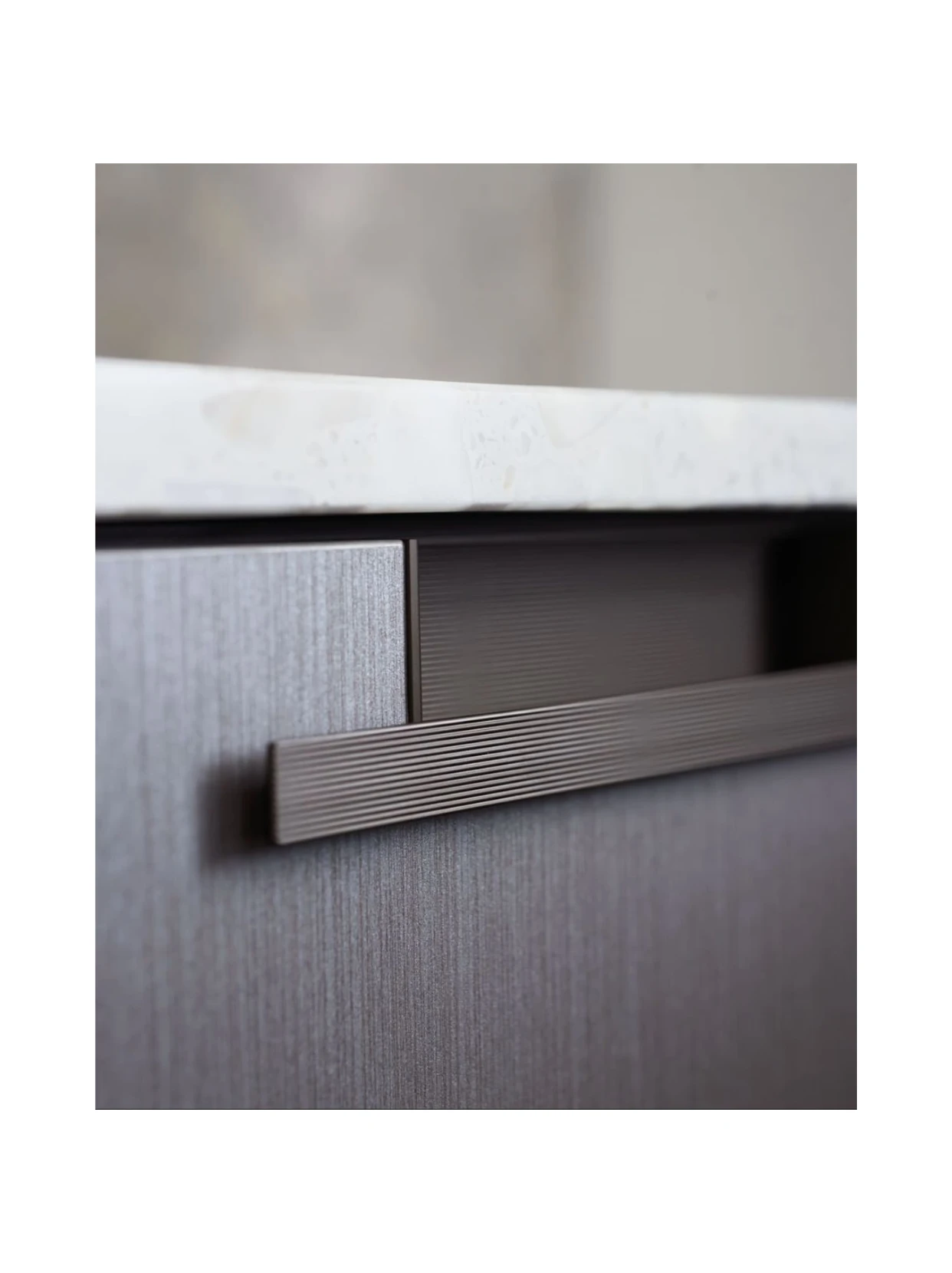
Verify that the sample represents the production face
A shop may be able to make a small sample in the right color while needing another substrate or process on a curved door. Ask which areas the sample represents. If the method changes on the end panel, have the maker show how that version will look next to the straight face.
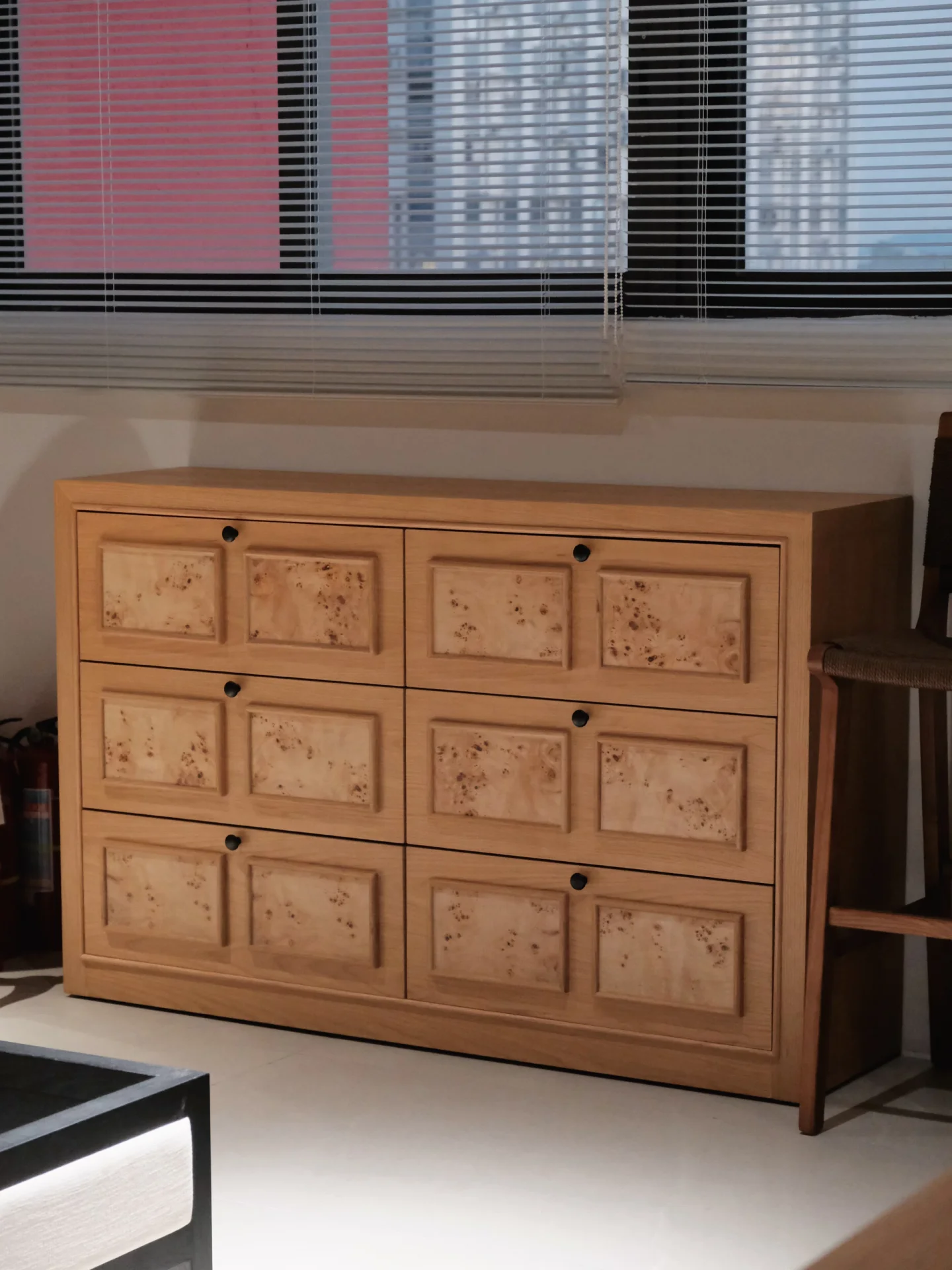
Compare the three routes at the same delivery point
Price cabinet, drawings, samples, hardware, packing, and delivery to the same warehouse. Get a date and last approval point for each route. If a standard price assumes a larger order, ask for the actual one-piece total. A quote that leaves the curved detail open may still need to change.
Pay for the next piece of information you need
If two standard cabinets work and the only doubt is wood tone, start with swatches. If the machine needs a clear opening the drawing doesn’t show, ask for a section first. We’ll list what each drawing or sample costs, when you’ll get it, and what it helps you decide.
Compare one-off options in two steps
First eliminate any version that fails a hard condition, such as a door needing to open into a narrow dining passage. Then compare appearance and effort on what remains. For example, a stock cabinet might meet the width but have a square end that feels too heavy from the entry. A resized piece might give you the curve with a seam close to the front.
A fully custom piece could move the seam back but require a new mock-up and more time. Ask for a view from your main sightline and a detail that shows the seam. A one-off order is easier to approve when you decide what the next sample has to prove. Write down what counts as success, who will review it, and when you can switch back to another option if the detail isn’t acceptable.
Compare the two options that survive the first cut
Say a standard cabinet remains too wide even in the right finish. The resized cabinet needs two narrower doors, and a one-off build can keep the rounded corner. Ask both makers to draw the same maximum width, door divisions, and radius. Review the clear opening and the seam at the curve, then authorize the detail drawing or sample for the route you prefer.