Arcaya Material Guide
Why I Would Choose New Zealand Pine Boards for Custom Cabinetry
Between multi-layer plywood and New Zealand pine, the more expensive option can still be the calmer decision when the goal is a warmer, cleaner, and more reassuring built-in cabinet system.

Today at Arcaya, we are looking at a very practical material question: if a custom cabinet project offers both multi-layer plywood and New Zealand pine, which one feels more suitable for a home that values comfort, durability, and better environmental performance?
The short answer is that New Zealand pine can be worth the higher price when the cabinet body is expected to feel solid, natural, and reassuring in everyday use. Plywood is still a familiar and practical material, especially for storage areas where budget control matters. But when the priority is a cabinet system that feels closer to furniture, pine brings a different kind of warmth.
1. Start with the role of each board
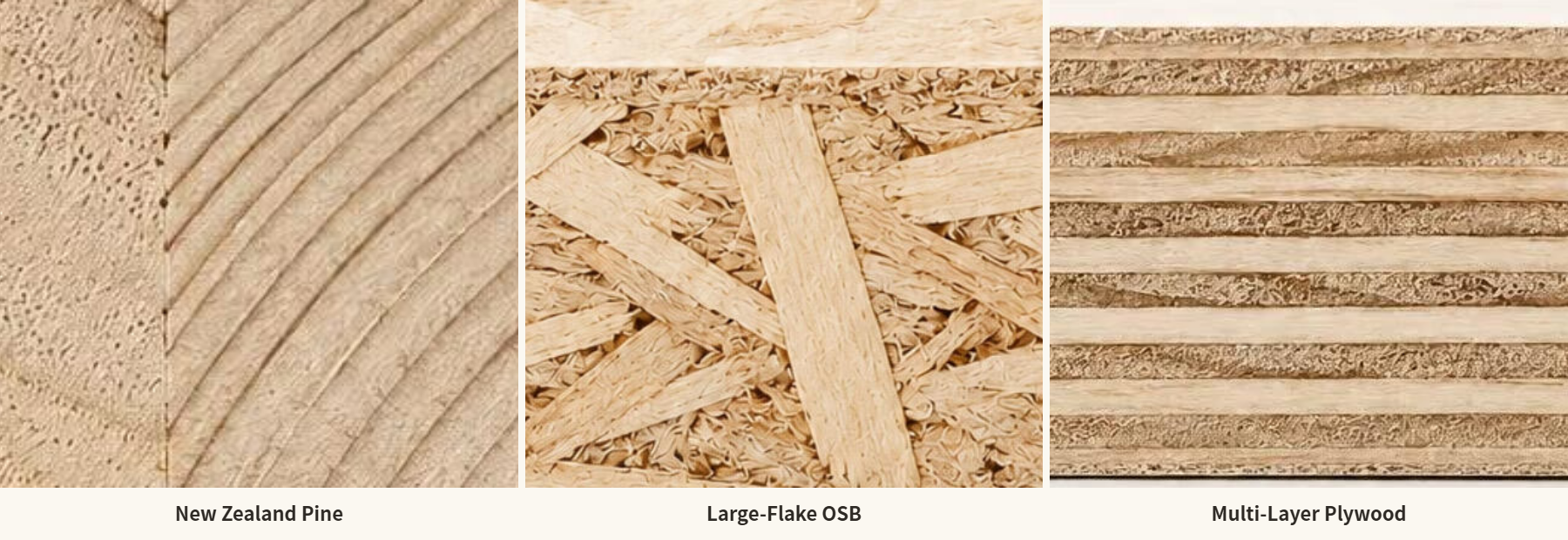
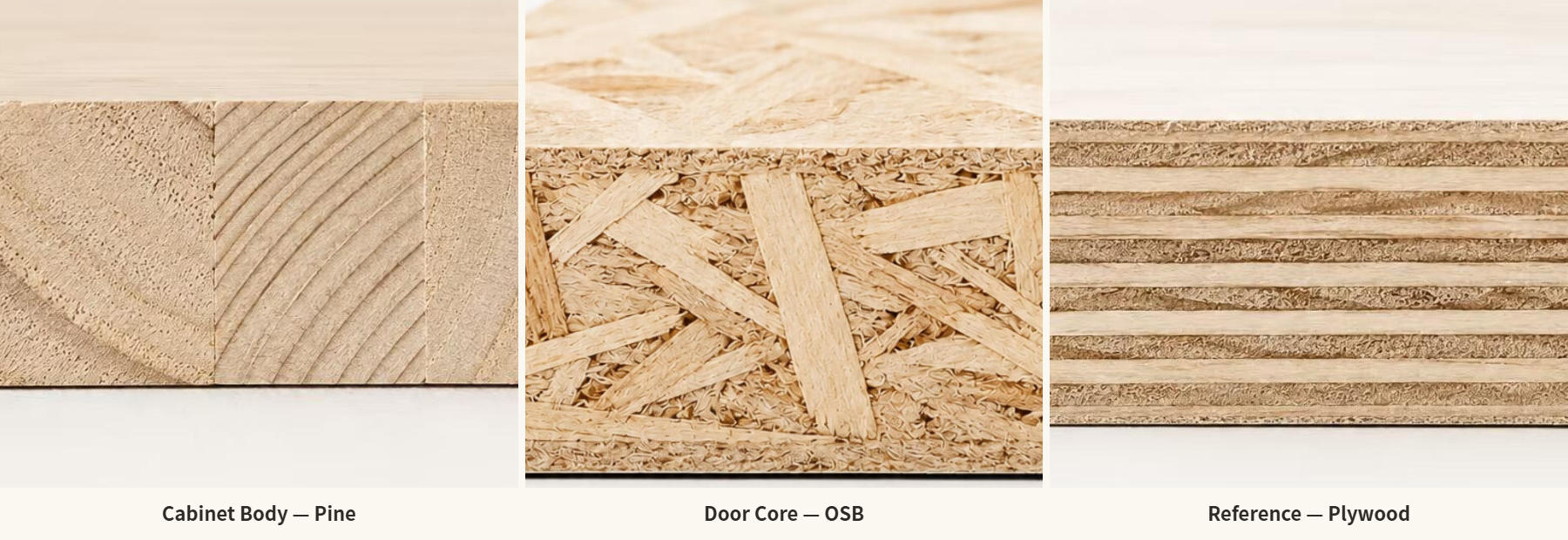
A cabinet is not made from one idea alone. The carcass, shelves, door panels, surface finish, edge sealing, hardware, and installation all work together. In this material plan, New Zealand pine is used for the cabinet body, while large-flake OSB is used for the door panels. That pairing makes sense because the body needs structure and screw holding, while the door panel needs a stable core that can support a refined visible finish.
2. What this looks like in a finished American home
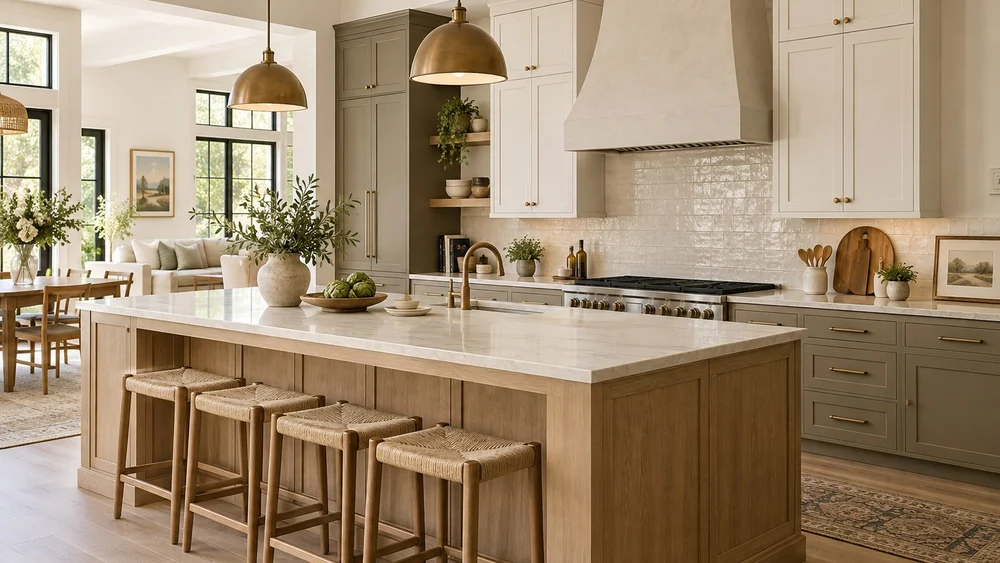
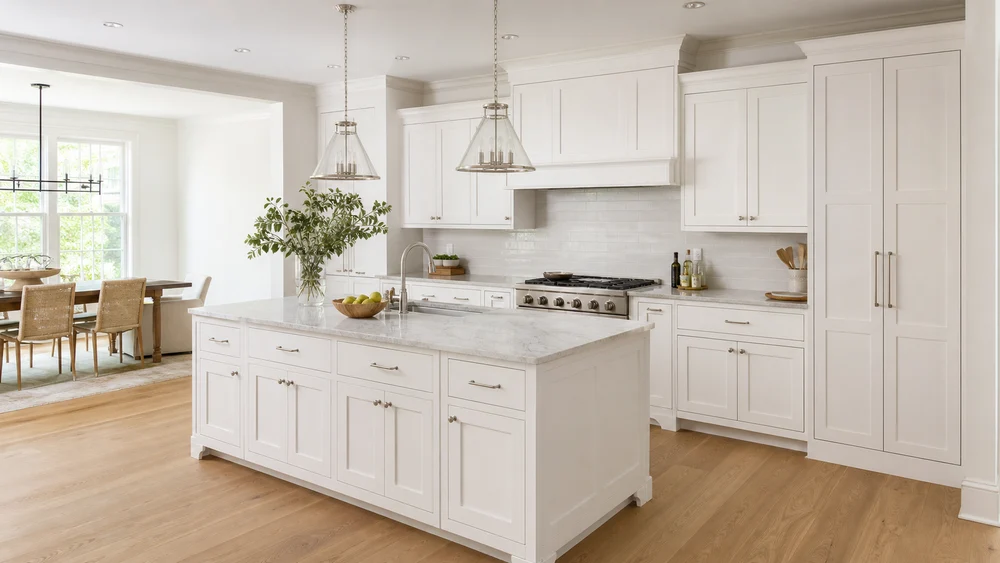
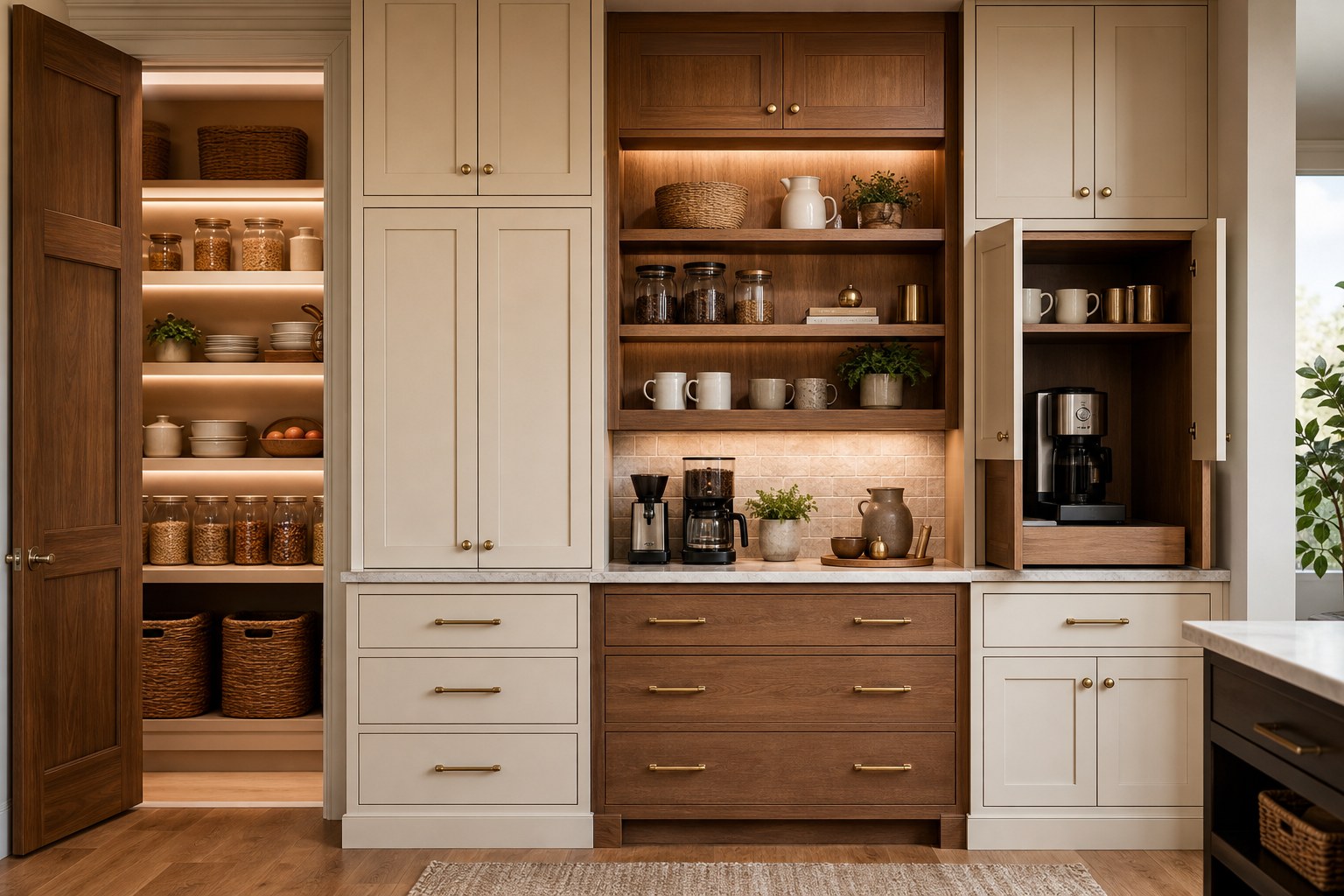
For readers in the United States, the most familiar way to understand this material choice is through finished cabinetry: a warm wood kitchen pantry wall, an organized mudroom and laundry zone, or a living room built-in with open shelves and closed storage. These are not rare luxury details anymore. They reflect a broader move toward warmer wood cabinetry, more pantry storage, and practical built-in features in everyday renovation planning.


3. Why pine feels different from plywood
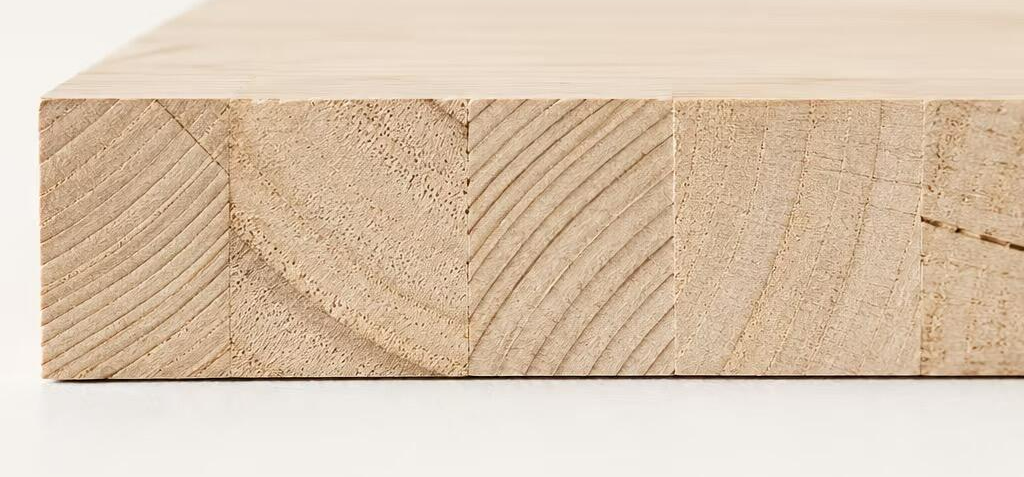
Multi-layer plywood is built from thin sheets of wood veneer bonded in alternating directions. This gives it good dimensional strength and makes it a popular cabinet material. New Zealand pine, by comparison, has a more natural wood character. It can feel warmer in tone, softer to the eye, and more substantial when used for shelves and cabinet bodies.
The reason many homeowners lean toward pine is not only the look. It is also the feeling of choosing a material with a clearer natural identity. If the pine board is properly sourced, certified, dried, and finished, it can support a lower-emission cabinet strategy. That does not mean every pine board is automatically better than every plywood board. The adhesive, finish, supplier, and certification still matter.

4. The environmental decision is a system, not a slogan
It is tempting to label one board as green and another as not green, but real homes are more complicated. A cleaner cabinet depends on the board itself, the glue system, the surface coating, the edge treatment, and ventilation after installation. If a homeowner chooses pine because it feels more environmentally responsible, the next questions should be practical: What certification does the board carry? What finish will be used? Are the cut edges sealed? How long will the cabinets air out before move-in?
This is where the higher price can make sense. Paying more for pine is most worthwhile when the material choice is part of a full low-VOC plan. That means choosing reliable suppliers, confirming formaldehyde and emissions standards, avoiding overly strong-smelling coatings, and asking the cabinet maker to seal vulnerable edges and screw holes carefully.
5. Where OSB fits into the plan
Large-flake OSB often appears visually more textured and engineered than pine. For a door panel core, that can be useful because OSB is stable and efficient when paired with a suitable exterior surface. The important point is that the exposed door finish should still match the desired room style. In a warm modern home, this might mean a clean veneer, a soft painted surface, or a matte finish that does not fight with the natural tone of the pine carcass.

Using pine for the cabinet body and OSB for the doors is also a reminder that material selection should be layered. Not every part needs the same board. A thoughtful project chooses structure, surface, cost, and environmental performance separately, then brings them back into one coherent design.
6. Know the common board families
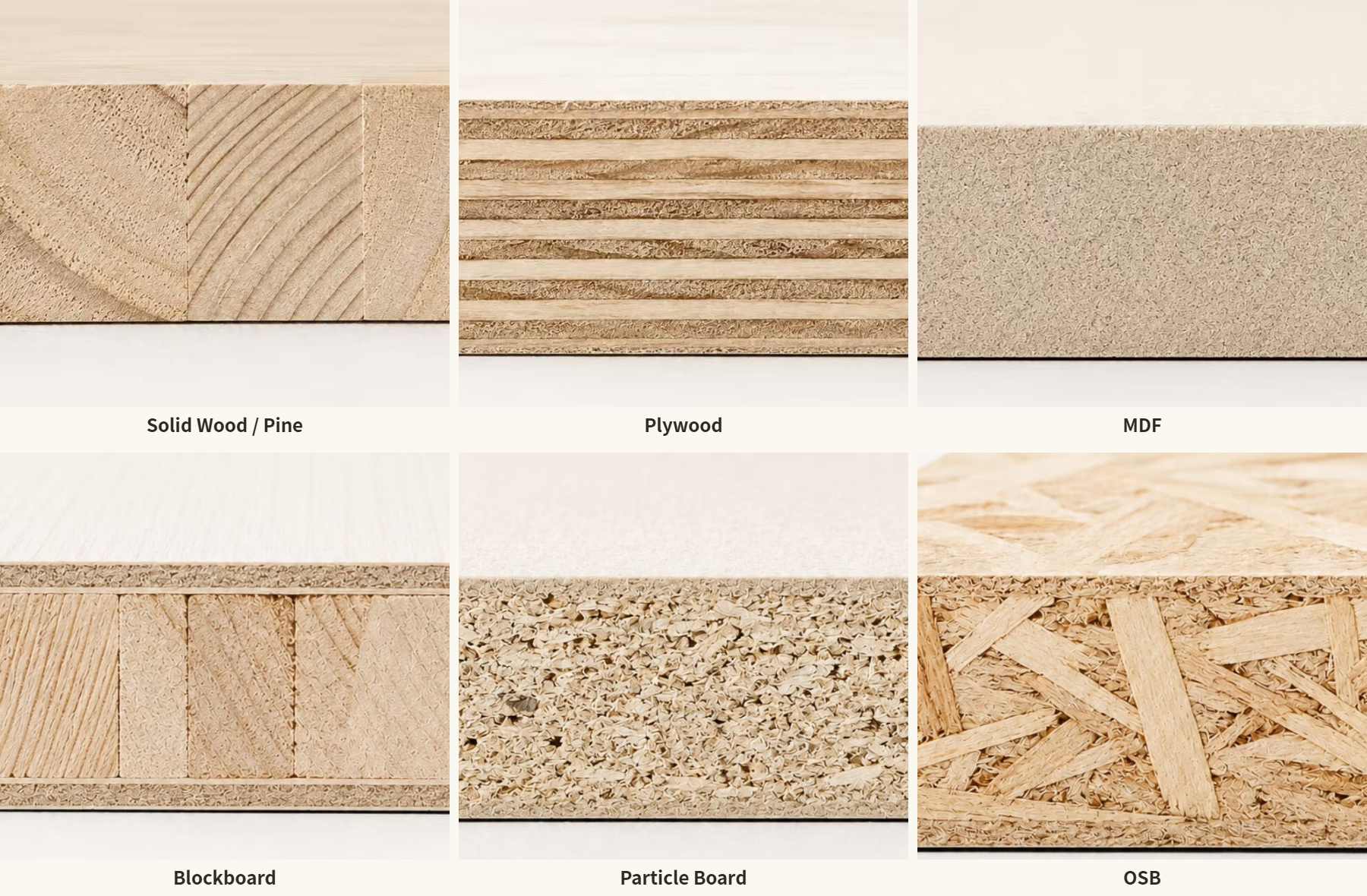
Solid wood, plywood, MDF, blockboard, particle board, and OSB all have legitimate uses. MDF can be excellent for smooth painted surfaces but needs moisture control. Particle board can be economical, though density and edge quality vary widely. Plywood is strong and practical, while OSB offers engineered stability. Pine sits in a more natural category and is most attractive when homeowners want the cabinet body to feel sturdy, warm, and less synthetic.

Arcaya Takeaway
Choosing New Zealand pine over multi-layer plywood is not only a luxury upgrade. It can be a sensible decision for homeowners who want cabinetry that feels natural, sturdy, and more aligned with a lower-emission interior. The key is to avoid treating the board name as the whole answer. Ask for certification, specify low-VOC finishes, seal the edges, and match each board to the job it performs best.
For this type of cabinet plan, the most balanced approach is clear: use New Zealand pine for the cabinet body, use large-flake OSB where a stable door panel core is appropriate, and keep plywood as a practical reference point when comparing cost and structure. The result is a more considered cabinet system, not just a more expensive material list.
Design note: if the renovation goal is healthier indoor air, material selection should always be paired with proper installation, ventilation, and a finish schedule that allows the cabinetry to cure before daily use.