Cabinet Box Materials Plywood vs MDF vs Particle Board
Cabinet doors get most of the attention, but the cabinet box is what quietly decides how a kitchen holds up. It is the structure behind the doors and drawer fronts: the side panels, top and bottom panels, back panel, shelves, and drawer boxes.
For an American kitchen, the right cabinet box material depends on budget, moisture exposure, construction quality, and how long the homeowner expects the kitchen to last. Plywood, MDF, and particle board can all appear in cabinetry, but they do not play the same role.
The goal is not to choose the most expensive material everywhere. The goal is to understand where each material makes sense, what questions to ask, and which parts of the cabinet should not be ignored.

Start With the Cabinet Box Not Only the Door
Many homeowners begin by choosing Shaker or flat panel doors, a paint color, and hardware. Those choices matter because they shape the look of the kitchen. But the cabinet box carries the weight of shelves, drawers, cookware, appliances, and daily use.
A cabinet box usually includes side panels, top and bottom panels, a back panel, shelves, and sometimes the drawer box itself. When a cabinet is described as plywood, MDF, or particle board, it is worth asking exactly which parts use that material.
This matters because some cabinets use one material for the visible surfaces and another material inside. A product may be marketed as a plywood cabinet box, but the shelves, back panel, or drawer components may be different. A clear specification is more useful than a broad material name.

Plywood Cabinet Boxes
Plywood is made from layers of wood veneer bonded with the grain direction alternating from layer to layer. This layered structure helps plywood stay stable and gives it good screw holding strength, which is why it is commonly used for higher quality cabinet boxes.
In kitchens, plywood is often valued because it handles moisture better than many particle board options. That does not mean plywood is waterproof. Edges, seams, sink areas, and cutouts still need careful sealing and good installation. But when water exposure or long-term use is a concern, plywood is usually the strongest cabinet box choice.
For American homes, plywood is especially worth considering around sink bases, dishwashers, pantry cabinets, tall storage, heavy drawers, and large kitchen islands. It can also be a good match for custom cabinetry because it gives the installer a stronger structure to work with during fitting and adjustment.

MDF in Cabinetry
MDF is made from wood fibers and resin pressed into a dense, smooth panel. It is often used for painted cabinet doors because it has a consistent surface and does not show natural wood grain. For a smooth painted Shaker door or slab door, MDF can perform very well when the finish is properly applied.
MDF is not usually chosen for every part of a cabinet box in a high-moisture kitchen. It is heavier than plywood and can swell if water enters an unfinished edge. That is why the location and finish quality matter. MDF can be a smart door material, but homeowners should be careful when it is used in wet cabinet areas or unsupported structural parts.
The key is not to reject MDF automatically. It is to understand the role it is playing. Painted door panels, decorative panels, and some interior components may use MDF successfully. Sink bases, heavy-duty shelves, and high-use structural parts often deserve a stronger or more moisture-resistant specification.
Particle Board in Cabinetry
Particle board is made from wood particles and resin pressed into panels. It is widely used in ready-made and budget cabinetry because it can create flat, consistent panels at a lower cost. With a good laminate or melamine surface, particle board can look clean and work acceptably in dry, low-stress areas.
The weakness is moisture and impact resistance. If water reaches the core, particle board can swell and lose shape. It also does not usually hold screws as well as quality plywood. In a kitchen, this becomes important near the sink, dishwasher, trash pullout, toe kick areas, and any cabinet that will be opened many times every day.
Particle board is not automatically bad. It can be appropriate for budget projects, rental properties, secondary spaces, or short-term needs. But when a homeowner wants a kitchen to feel solid and last many years, particle board should be used carefully and priced accordingly.
Compare the Materials by Use
Why Edges and Hardware Matter Too
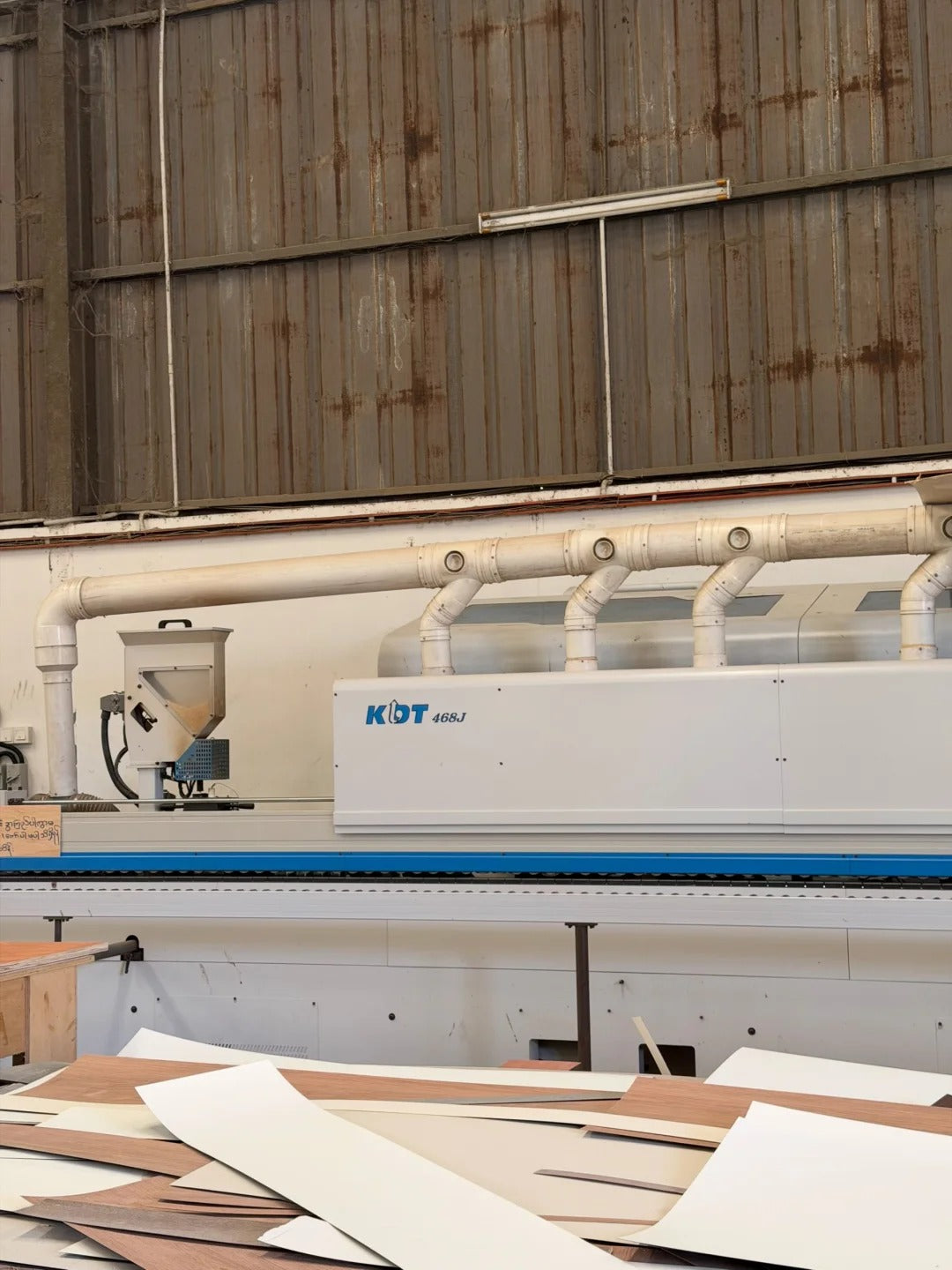
The cabinet box material is only one part of durability. Edgebanding, drilling accuracy, hardware quality, and installation also affect how the kitchen feels after daily use. A strong panel with poor edgebanding can still fail at the edges. A well-built box with weak hinges or drawer slides can feel cheap quickly.
This is why homeowners should ask about soft-close hinges, full-extension drawer slides, drawer box construction, shelf support, and how exposed edges are sealed. The area under the sink deserves special attention because it sees water, plumbing work, cleaning supplies, and daily traffic.
A good cabinet supplier should be able to explain the material, the thickness, the edge treatment, and the hardware in plain language. If the answer stays vague, it is difficult to compare the real value of two quotes.
What to Ask Before Ordering Custom Cabinets
Before approving a cabinet order, ask what the cabinet box is made from, not only what the doors look like. Ask whether the side panels, shelves, back panel, drawer boxes, and sink base use the same material. If they do not, ask why.
Ask about panel thickness, finish type, edgebanding, hardware brand or grade, drawer extension, soft-close function, moisture protection around the sink, and how installation will handle walls, floors, outlets, and appliances.
Also ask to see a sample or specification sheet when possible. The difference between two cabinet quotes is often hidden inside the box. A lower price may be reasonable if the project is simple, but it should not be mistaken for the same specification.
Final Thoughts
For most long-term American kitchens, plywood is the safest choice for the cabinet box when durability and moisture resistance matter. MDF can be excellent for smooth painted doors and decorative panels. Particle board can control cost, but it should be used with a clear understanding of its limits.
The best cabinet is not judged by one material name alone. It comes from the right material in the right place, clean construction, reliable hardware, careful installation, and a design that fits how the household actually uses the kitchen.
Arcaya can help homeowners compare cabinet materials, finishes, hardware, and construction details before ordering, so the finished kitchen looks good and performs well behind the doors too.