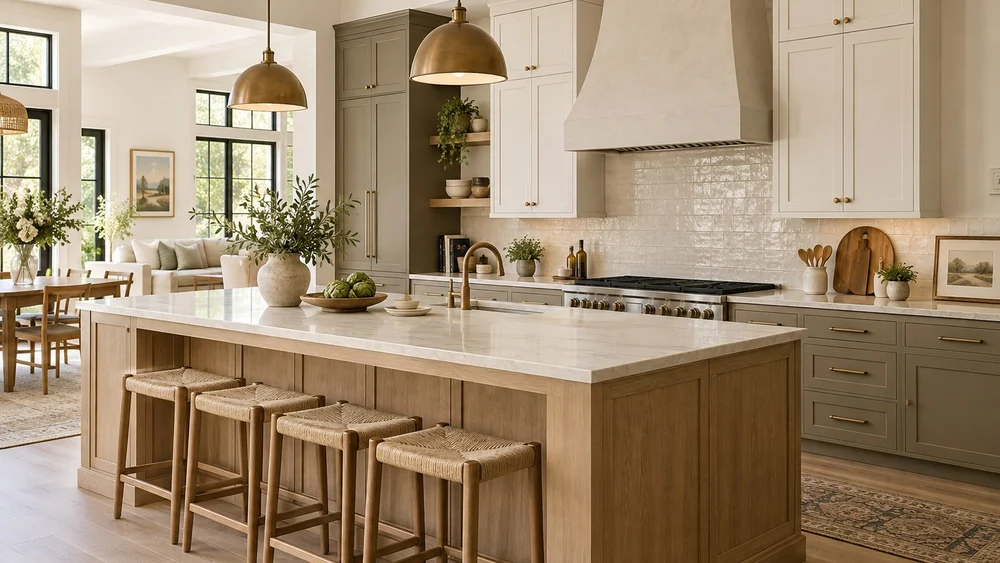
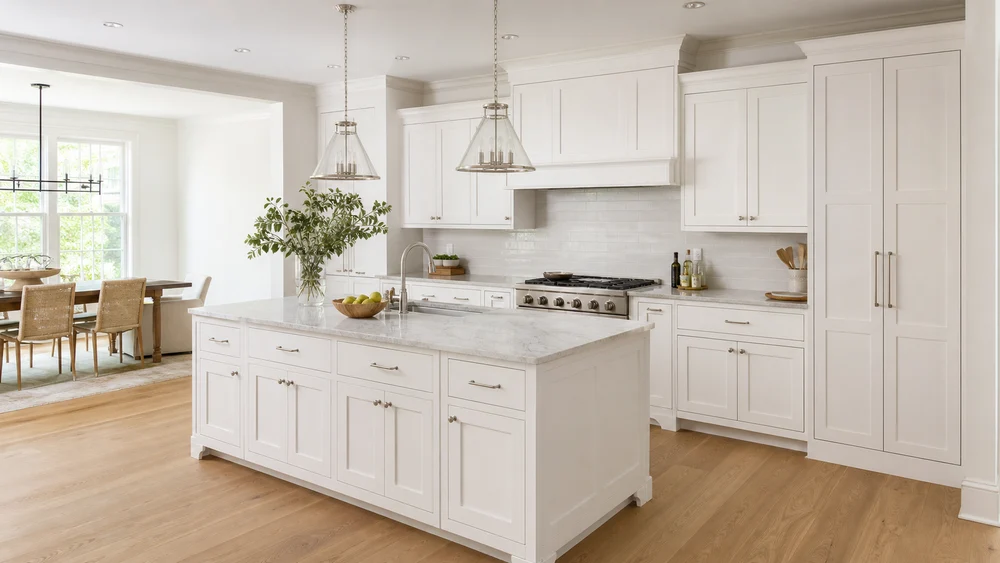
Kitchen cabinets do more than hold dishes. In a warm modern home, they set the tone for the entire kitchen: calm or busy, heavy or light, polished or relaxed. The best cabinet ideas feel practical first, but they also shape the mood of the room through wood tone, door style, hardware, countertop material, and how much is hidden or displayed.
A warm modern kitchen does not need ornate details. It needs quiet proportions, natural texture, soft contrast, and storage that makes everyday life feel easier. These ideas can help a kitchen feel tailored without becoming cold.
Start With the Cabinet Color Story
Before choosing a cabinet door, decide how much visual weight the kitchen should carry. Dark lower cabinets can make a bright room feel grounded, while pale uppers keep the walls open. Warm wood bases are especially useful because they soften stone, tile, metal, and appliances.
If the kitchen opens into a living or dining room, read those rooms first. Cabinets should echo the home’s larger palette instead of becoming a separate design moment.

Use Wood to Make Modern Lines Feel Warm
Flat or shaker-style cabinet fronts can feel very different depending on the wood tone. Honey oak, walnut, teak, and softly stained ash all bring warmth without needing extra decoration. When the cabinetry is simple, the grain becomes the detail.
For a calmer look, avoid mixing too many wood colors in one sightline. Let one main wood tone lead, then repeat it through stools, shelving, ceiling beams, or nearby furniture.


Make the Island Work Like Furniture
A kitchen island should not feel like a block dropped into the room. In warm modern homes, it often works best when it looks slightly more furniture-like: proportioned, generous, and connected to nearby seating, lighting, and flooring.
Think about the island from every side, not only from the cooking side. The overhang, stool height, end panels, and pendant lights all decide whether it feels integrated or bulky.
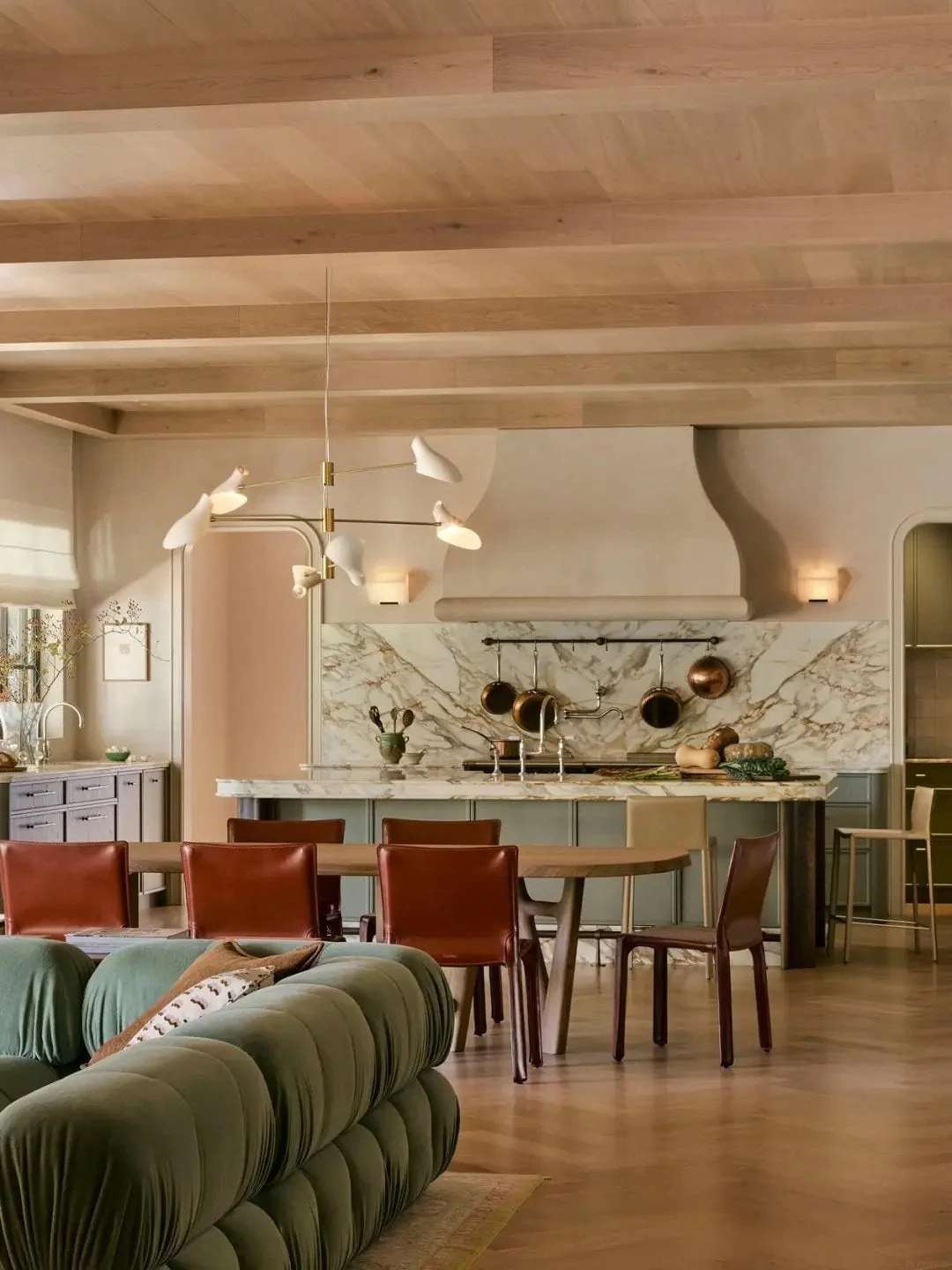


Keep White Cabinets From Feeling Flat
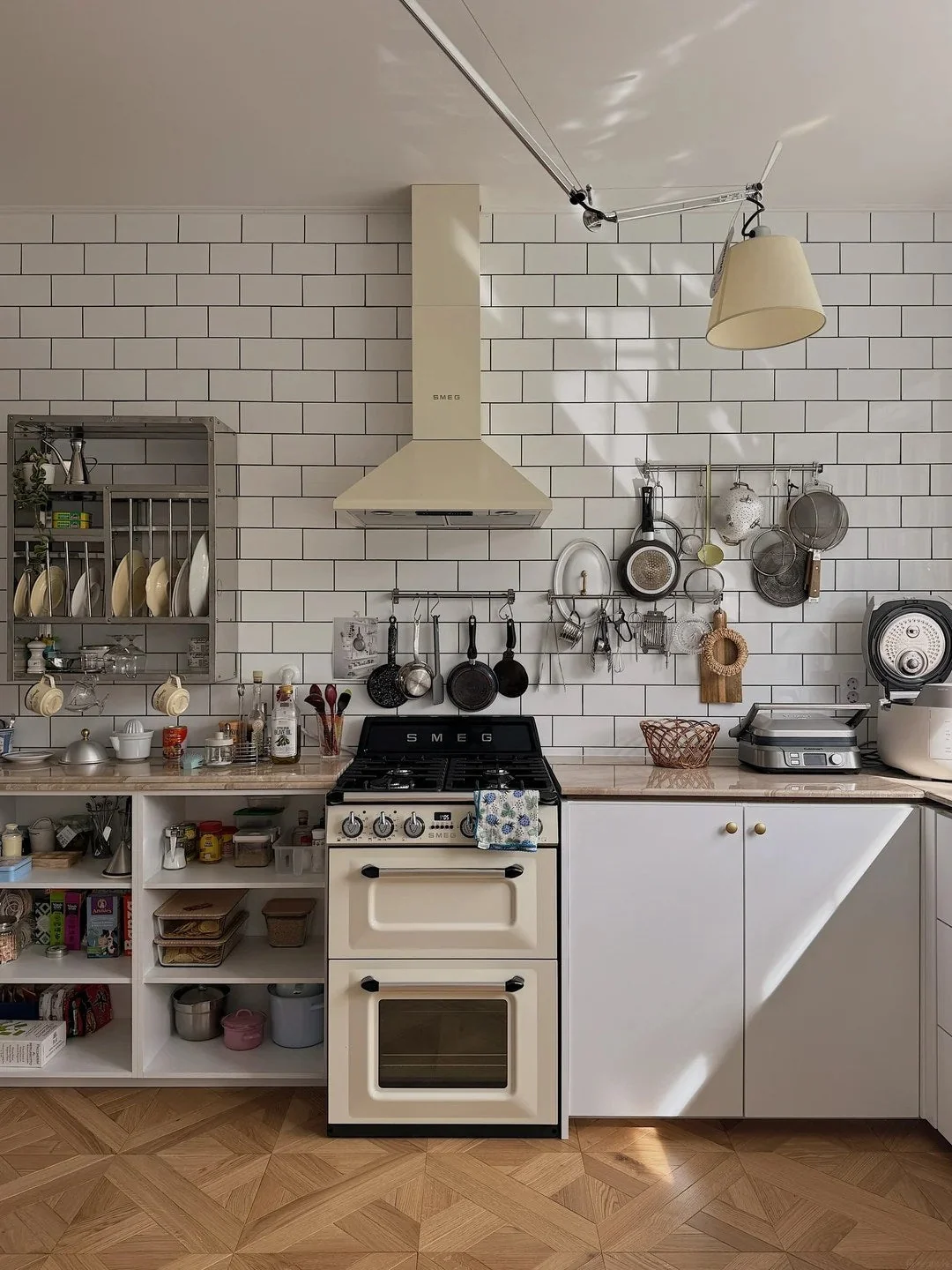
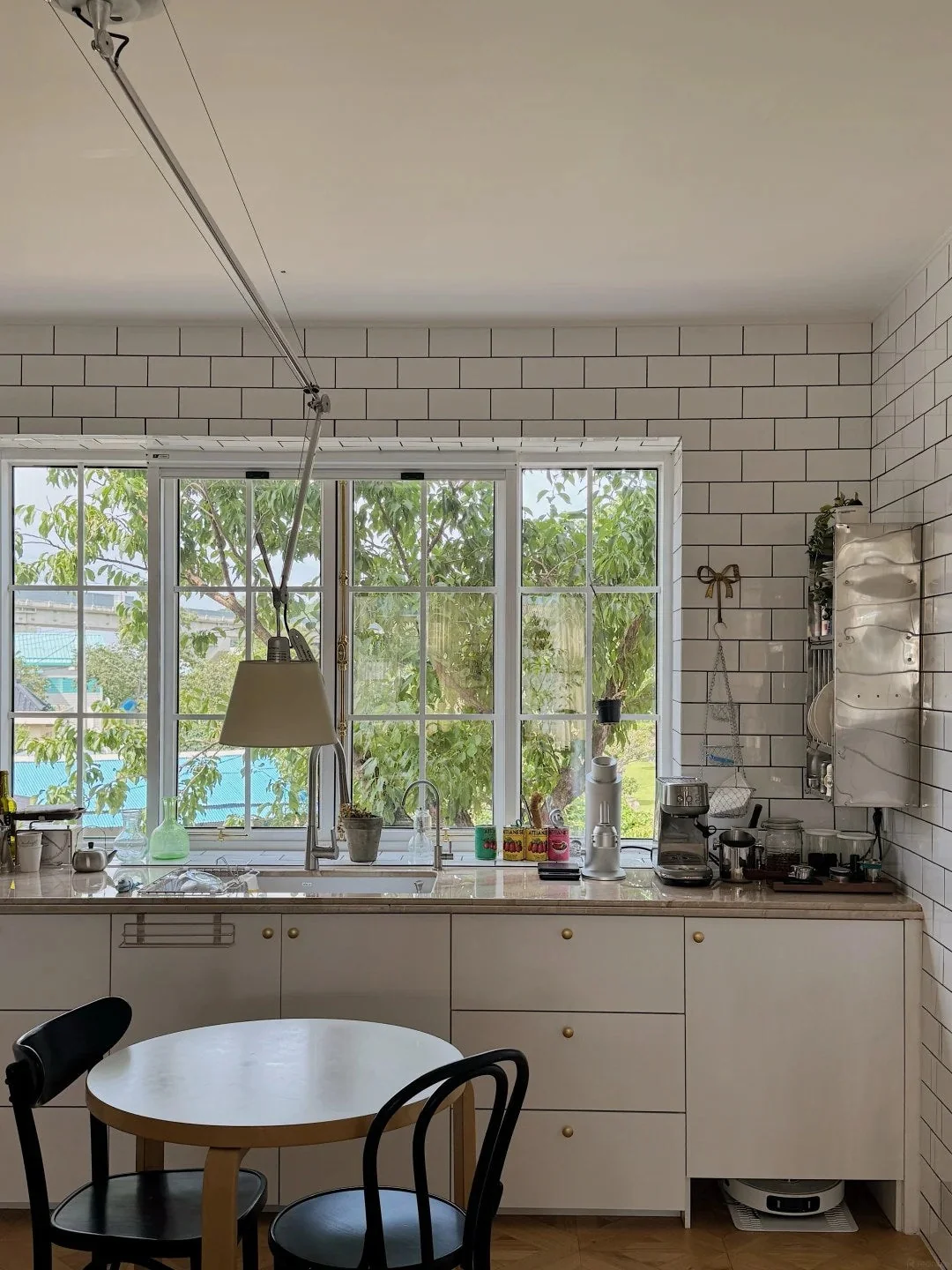
White cabinets can still feel warm if the room has enough texture around them. Pair them with wood floors, handmade tile, soft pendant lights, open shelving, greenery, or a stone surface with movement. The goal is clean, not empty.
Choose white carefully. A slightly creamy white usually works better in warm modern homes than a cold blue-white, especially beside brass, timber, or natural stone.


Mix Closed Storage and Open Display
The most livable kitchens hide the visual noise and display only what adds warmth. Closed lower cabinets are useful for appliances and bulk storage, while open shelves or glass fronts can hold ceramics, cookbooks, plants, and everyday pieces that make the kitchen feel personal.
Open storage looks best when it has a job. Use it near coffee, breakfast, serving pieces, or a small styling zone, rather than spreading open shelves across every wall.
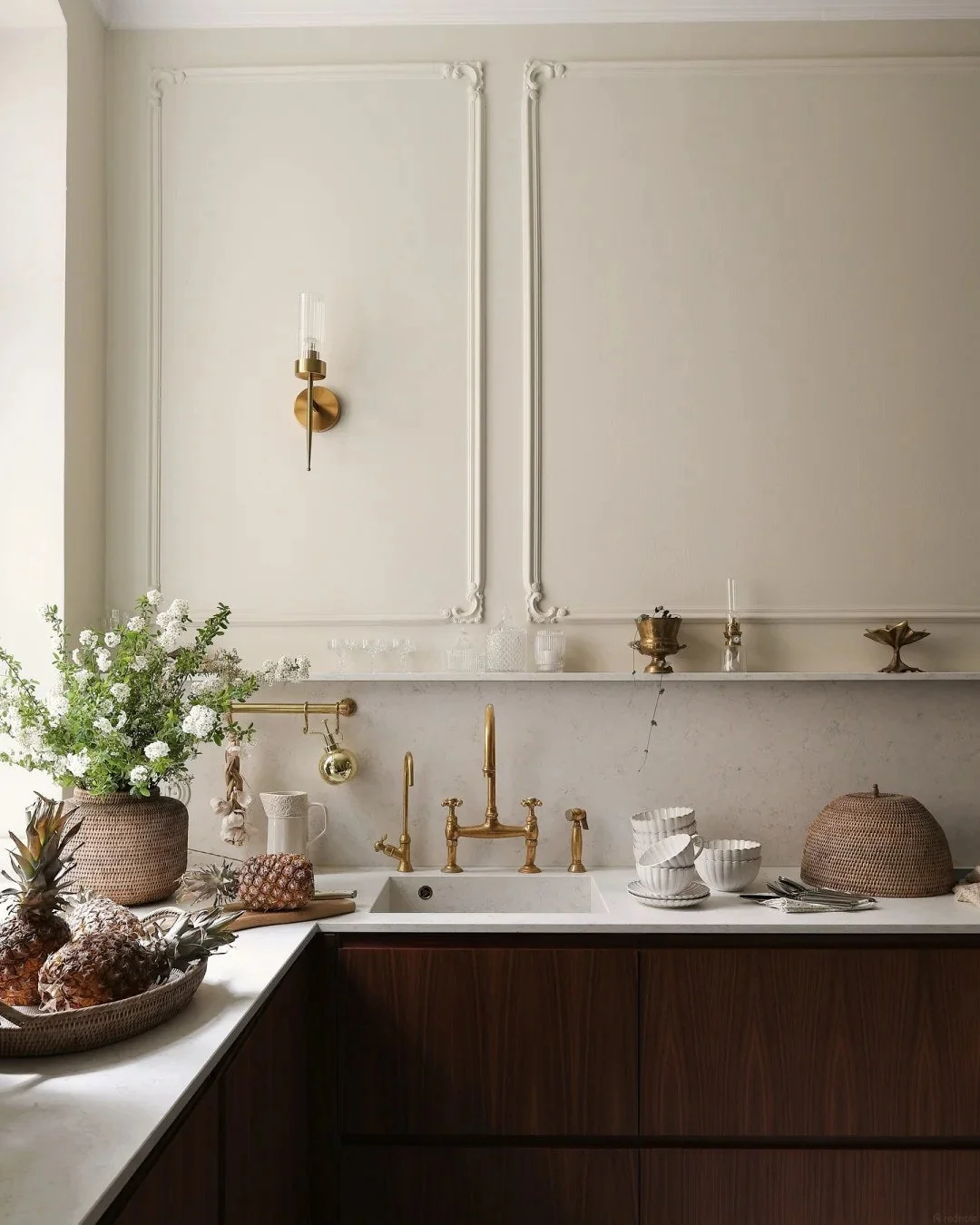
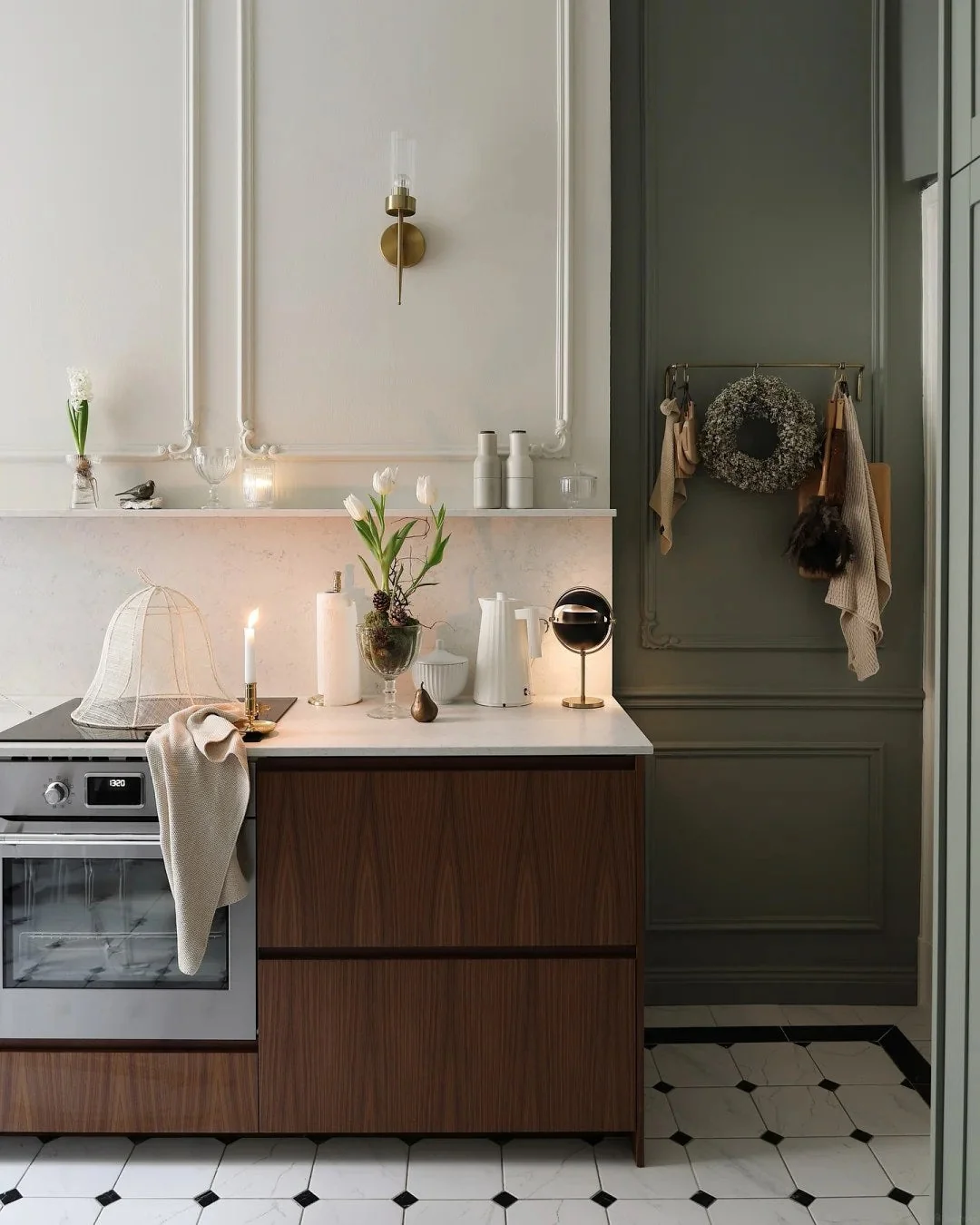
Use Traditional Details With a Modern Hand
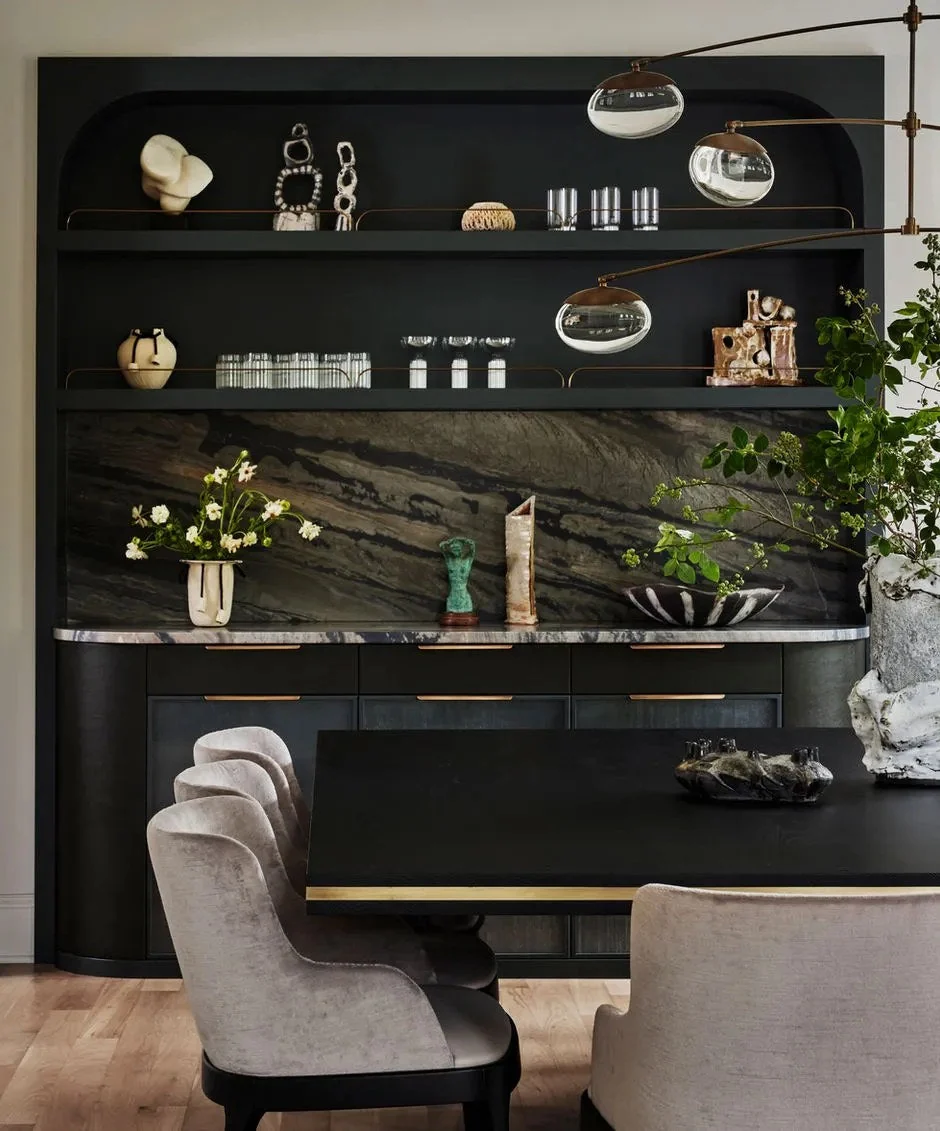
Paneling, brass hardware, wall sconces, and classic cabinet profiles can still belong in a modern kitchen. Keep the palette restrained, simplify the surrounding surfaces, and let the details feel architectural rather than decorative.
This is also where hardware matters. Slim pulls, small knobs, aged brass, or dark metal can change the cabinet mood without changing the whole room.

Let Small Kitchens Be Graphic
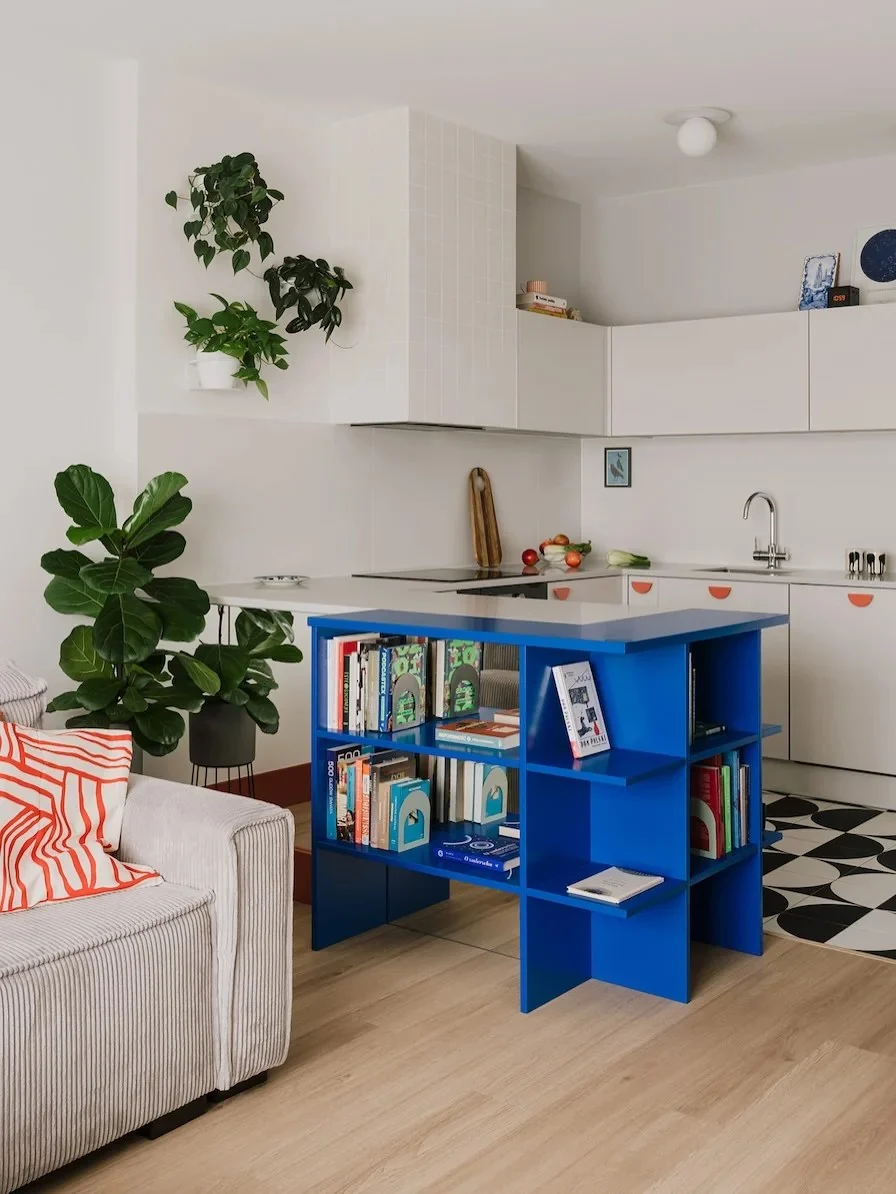
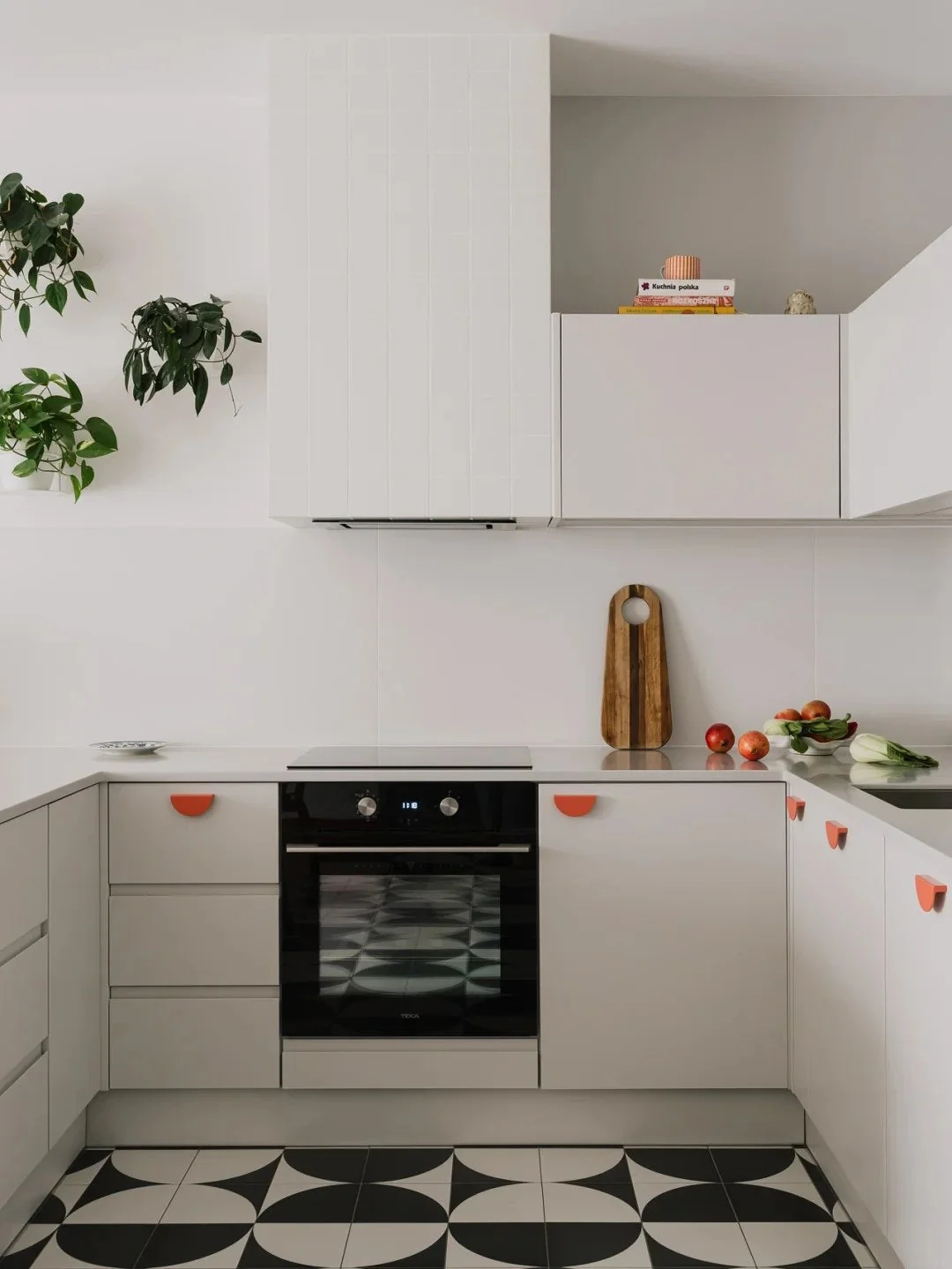
Small kitchens do not have to disappear. A clear floor pattern, a colorful island, a compact cabinet run, or a strong counter line can make the room feel intentional. The trick is to keep one bold move and let the rest stay quiet.
In a narrow kitchen, clean cabinet alignment is more important than adding more features. Keep appliances, handles, and upper cabinets visually organized so the room feels planned.

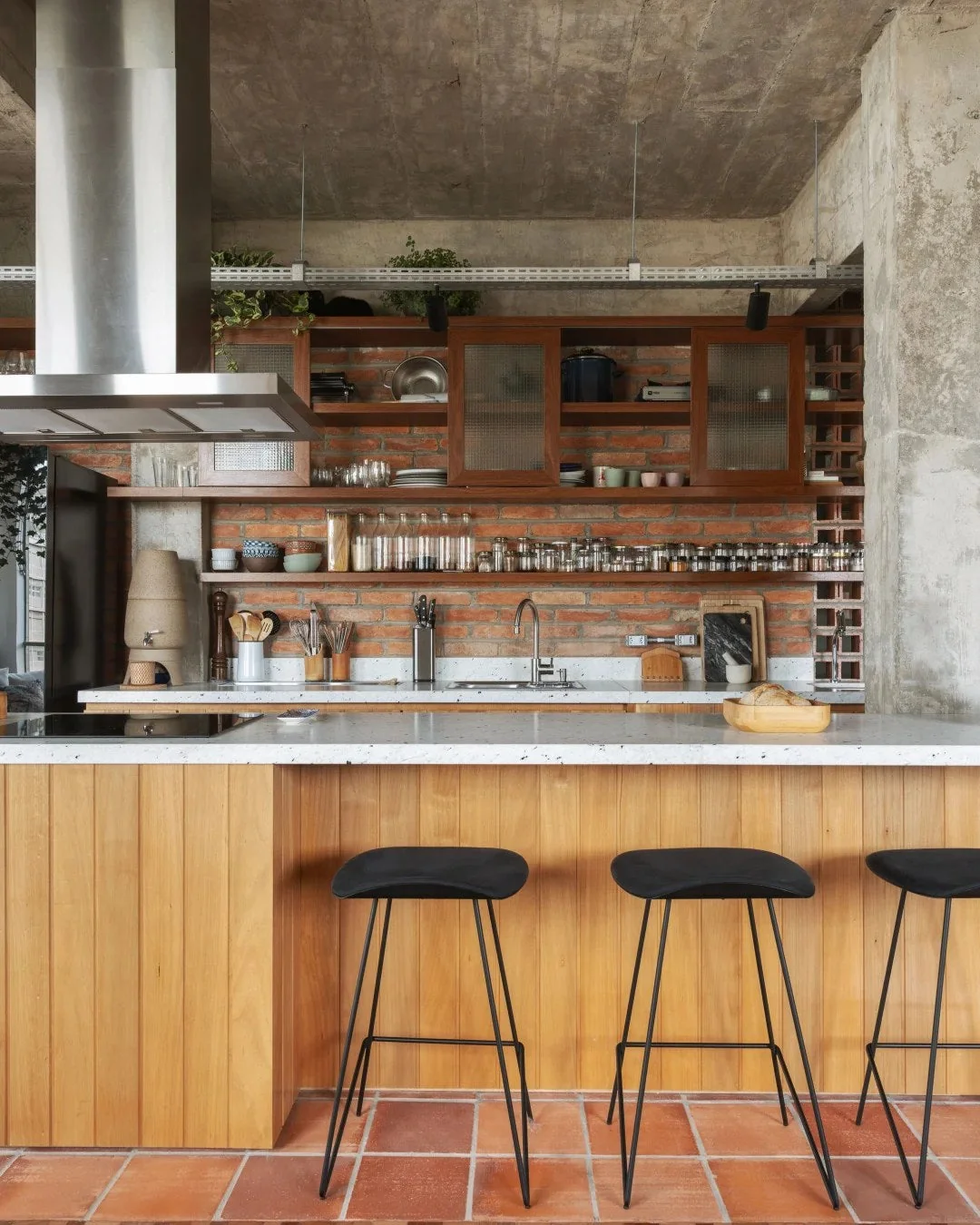
Balance Industrial Materials With Warm Fronts
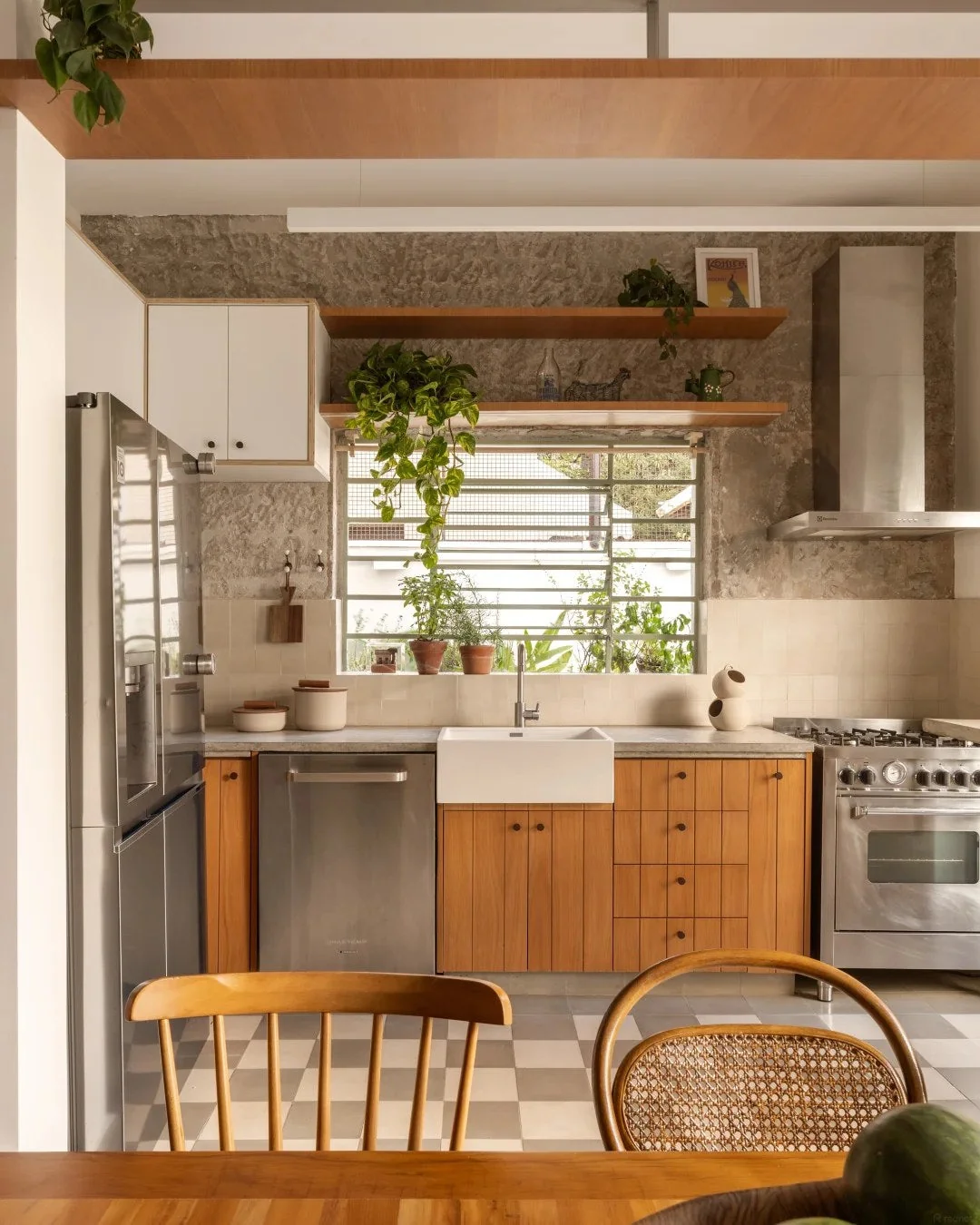
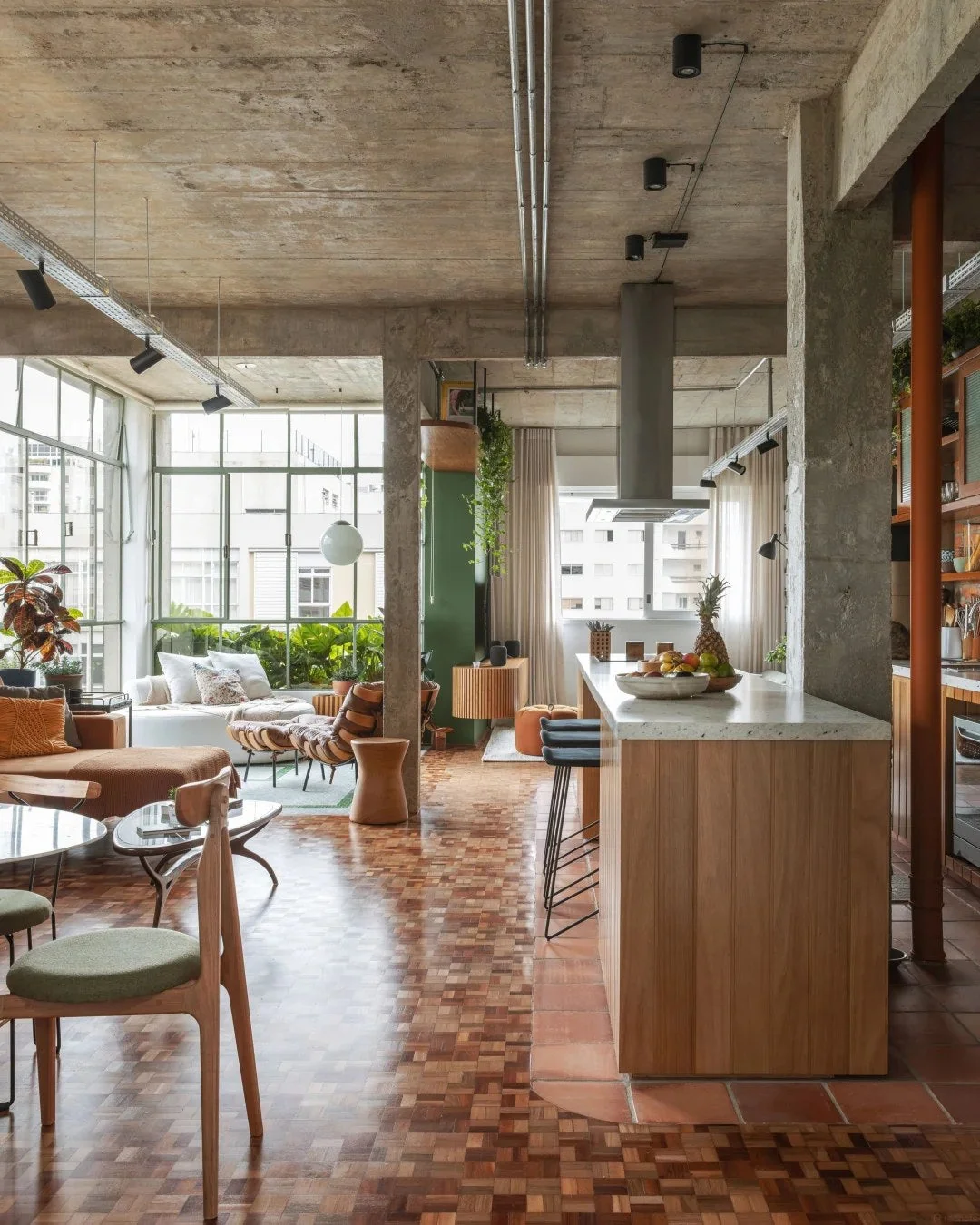
Concrete, stainless steel, black metal, and exposed ceilings can look beautiful, but they need warmth nearby. Wood cabinet fronts, terracotta floors, plants, and softer wall colors keep the kitchen from feeling too hard.
A good warm modern kitchen can handle contrast. The key is making sure every hard surface has a softer partner: timber with steel, plaster with stone, plants with tile, or woven stools with a sharp island.

Try Muted Color Instead of Pure Neutral
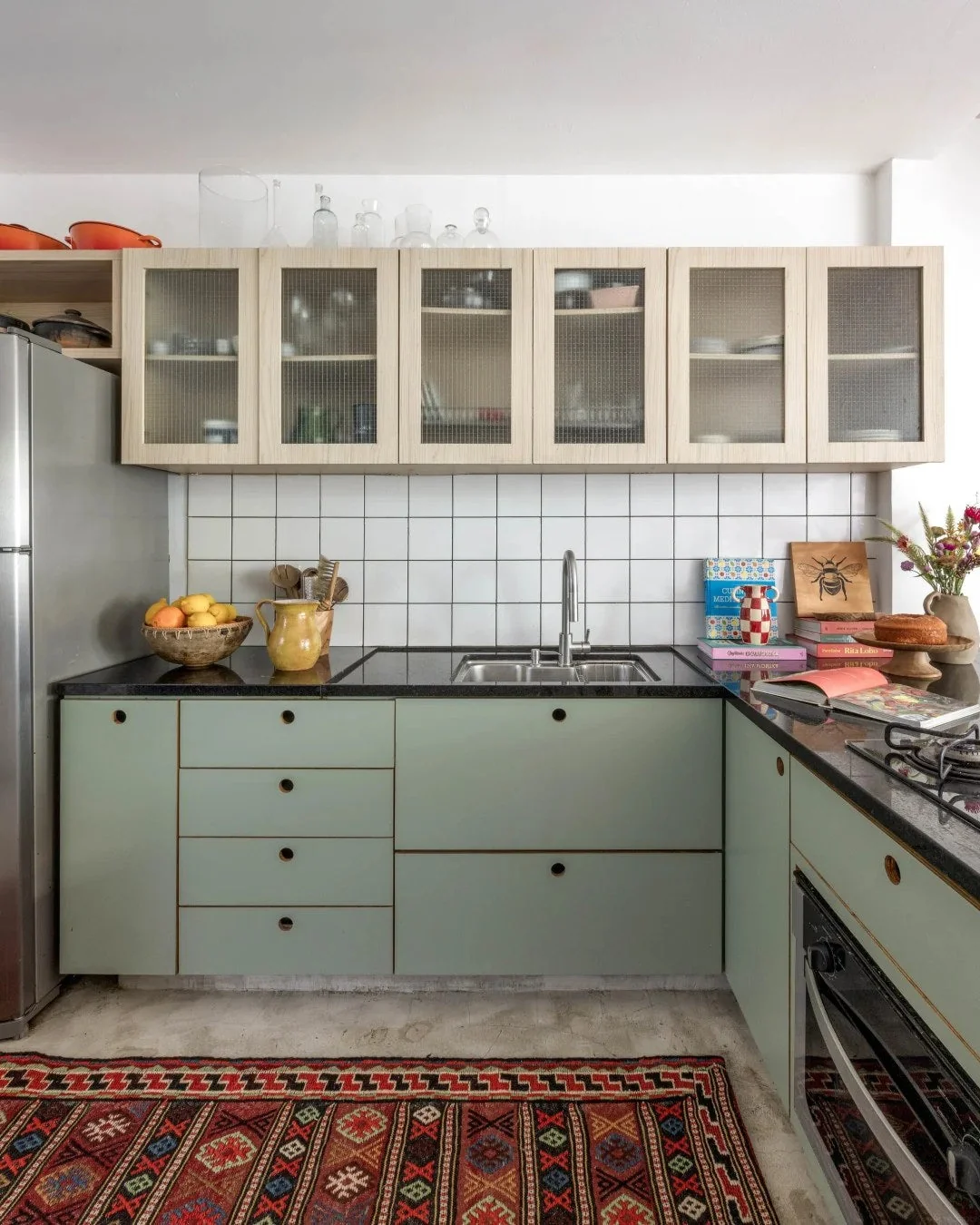
Warm modern does not always mean beige. Muted green, clay, mushroom, graphite, and soft blue can make cabinets feel more individual while staying calm. These colors work best when they are grounded by natural wood, stone, or woven texture.
Muted color is easiest to live with when it appears in a cabinet zone rather than every surface. Try it on lowers, tall storage, an island, or glass-front uppers while keeping the main walls quiet.

The Warm Modern Cabinet Formula
For a kitchen that feels modern but never cold, start with practical storage, then layer warmth through material. Choose cabinet fronts with a quiet profile, repeat wood or color in more than one place, use stone or tile for movement, and keep the most visible shelves edited. The result is a kitchen that feels beautiful, useful, and easy to live with every day.