A calm bedroom usually depends on storage that feels invisible, intentional, and easy to use. Wardrobes and closets do not have to dominate the room. They can become quiet architecture, a soft backdrop, or a practical layer that lets the bed, light, and textiles feel restful.
The best wardrobe and closet ideas begin with real habits: what needs hanging, what can be folded, what should be hidden, and what deserves to stay visible. Once those decisions are clear, the bedroom can feel organized without looking sterile.
Start With the Storage Wall
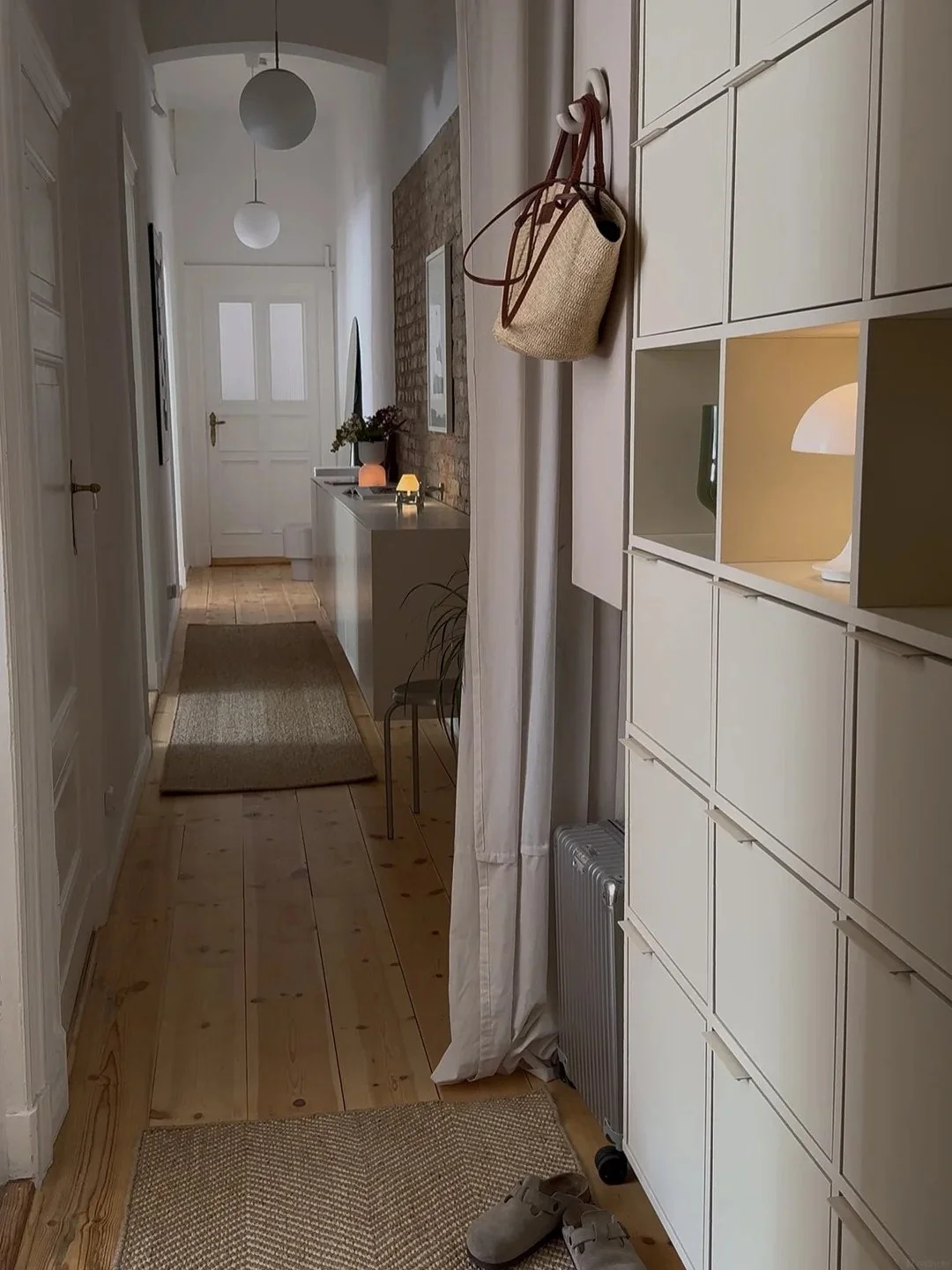
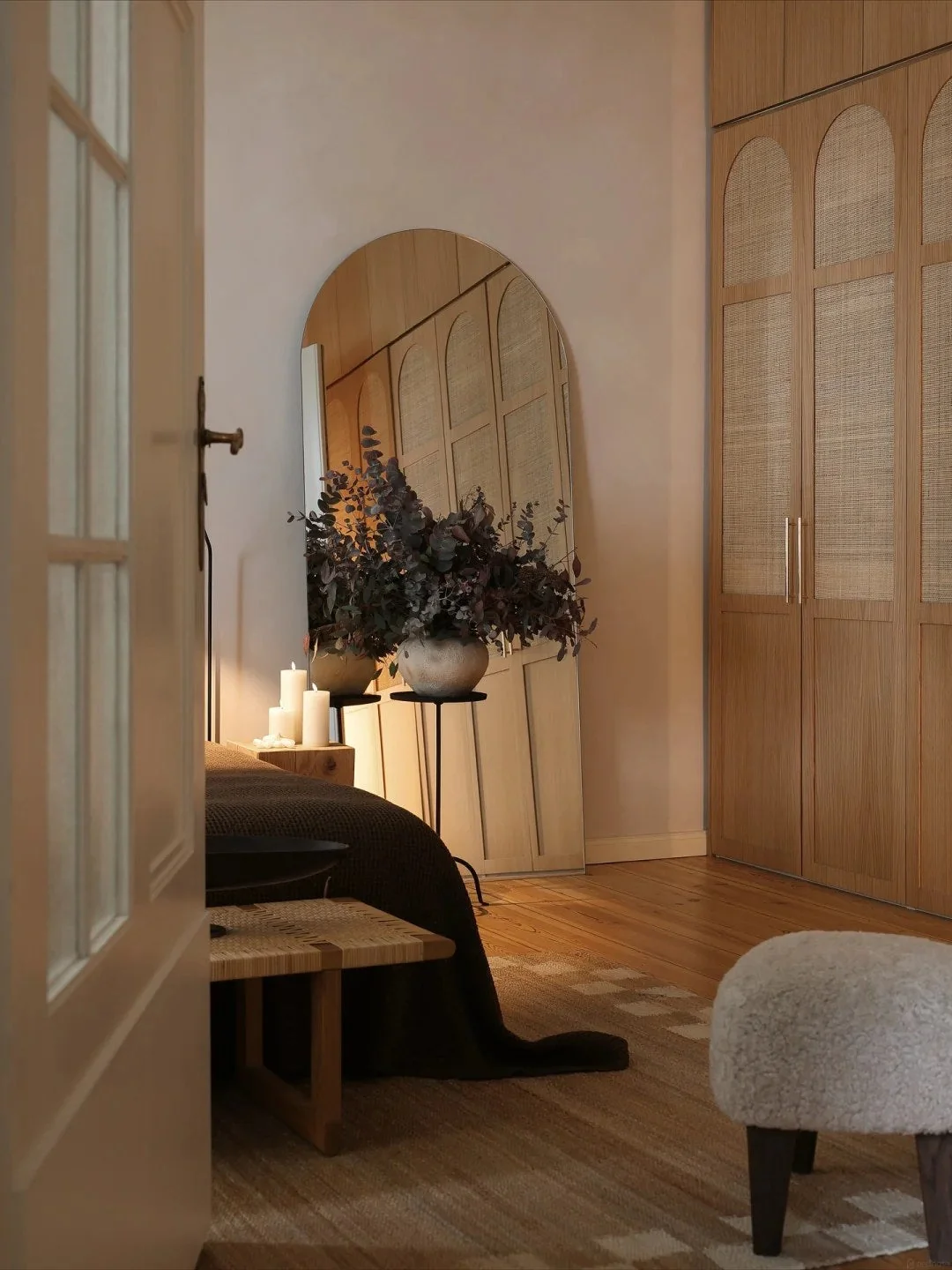
If the bedroom needs a lot of storage, the calmest solution is often one strong wall rather than several scattered pieces. Full-height wardrobes, paneled doors, or a built-in run can absorb clothing, luggage, and daily extras while keeping the room visually quiet.
This works especially well when the wardrobe color is close to the wall color. The doors can feel like a calm background instead of a heavy cabinet, and the room keeps more visual space around the bed.

Let the Bed Carry Hidden Storage
Not every bedroom has room for a walk-in closet. A storage bed, low platform, or bed frame with open cubbies can hold blankets, seasonal textiles, and off-duty items without adding another cabinet. Keep the materials warm so the storage feels like furniture, not a workaround.
Use this idea for things you do not reach for every day. The most-used clothing should still be easy to access, while under-bed storage can quietly handle spare bedding, guest linens, and out-of-season pieces.


Create a Dressing Moment
A mirror, dresser, console, or small cabinet can turn daily dressing into a more graceful routine. This zone does not need to be large. It only needs a clear surface, a place for small accessories, and enough visual breathing room that it does not become a drop spot.
A good dressing zone should answer the small questions of the morning: where jewelry goes, where a watch lands, where a bag can sit for a moment, and where one final mirror check happens.

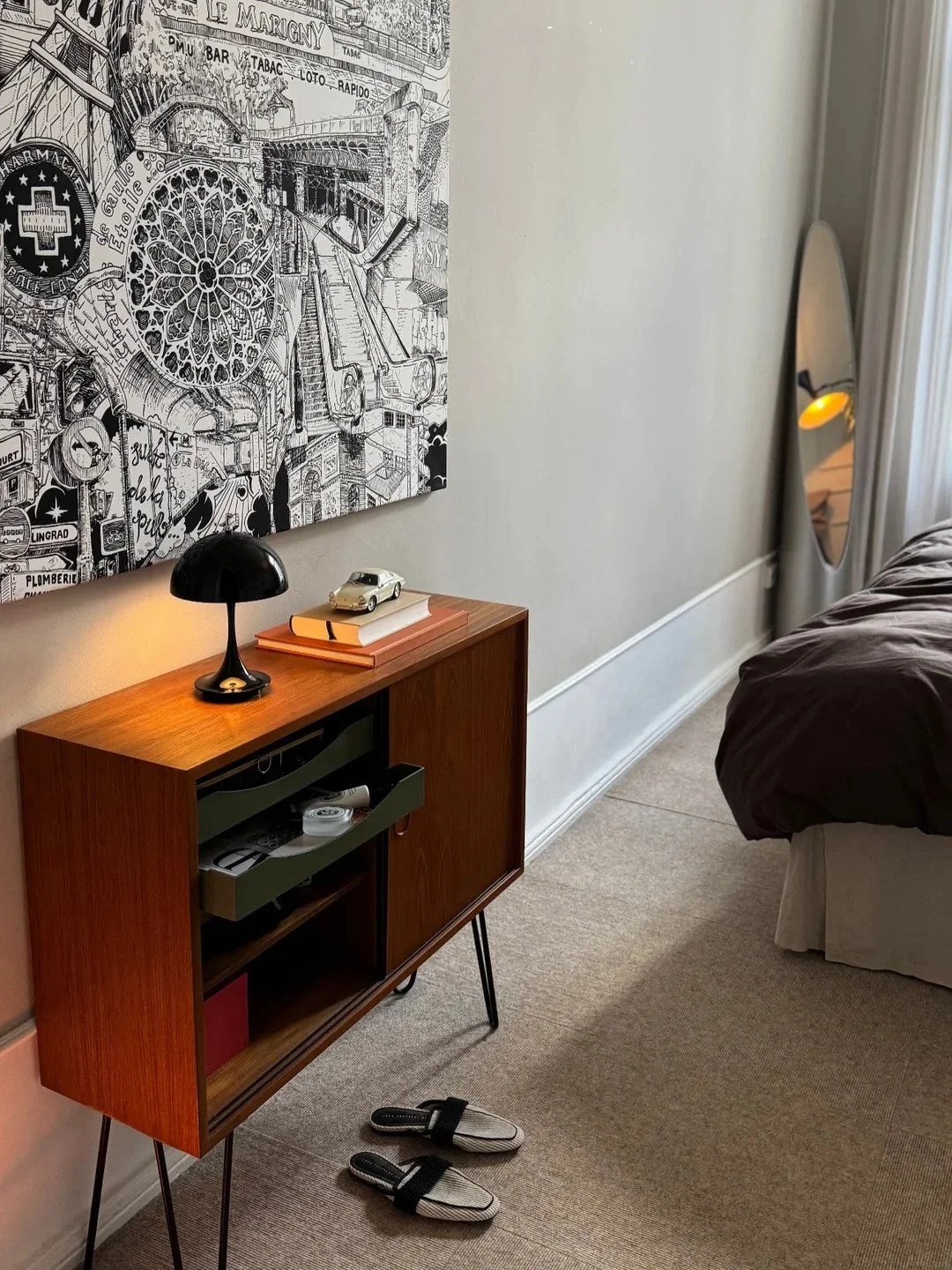
Use Small Cabinets for Daily Clutter
Bedside storage is where calm bedrooms often succeed or fail. Closed drawers are helpful for chargers, glasses, books, and personal items, while a slim tabletop keeps the room from feeling crowded. Choose a cabinet that matches the mood of the bed rather than competing with it.
If the room is narrow, choose a bedside piece with legs or a lighter shape. If the bed is very simple, a small vintage cabinet can add warmth without making the room feel busy.

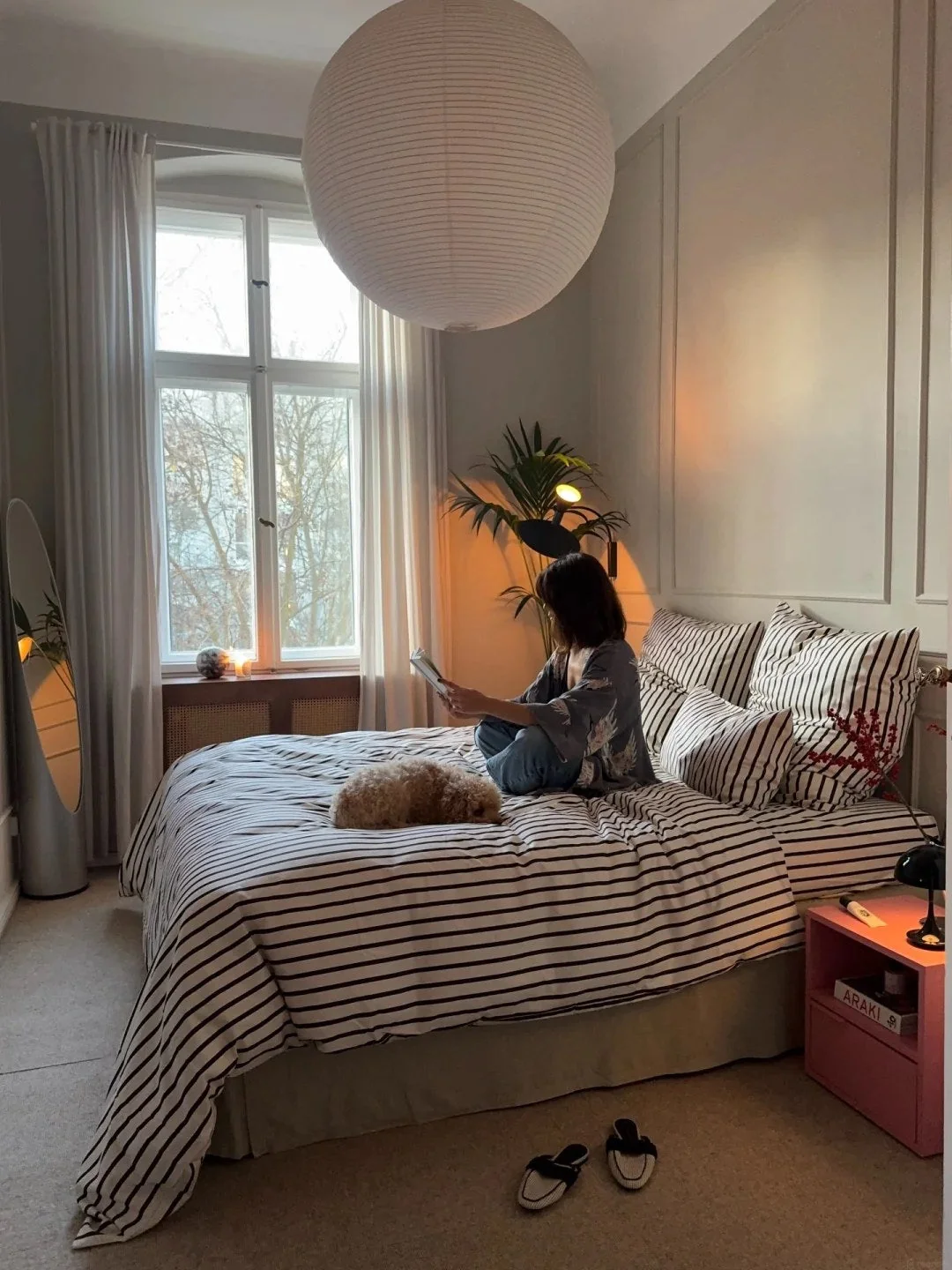
Match Storage to the Bedding Mood
Wardrobes and closets feel softer when their colors relate to the bed. Pale wood, warm white, mushroom, taupe, gray-green, and muted brown all work well in restful bedrooms. When bedding is darker, keep nearby storage low and simple so the room still feels open.
Think of storage as part of the textile palette. A closet door, drawer front, or basket should sit comfortably beside sheets, curtains, rugs, and throws, not fight them for attention.


Make Corners Useful Without Filling Them
Bedroom corners are useful for secondary storage, but they should not feel packed. A small chair, basket, narrow cabinet, or low shelf can support daily life without turning the room into a storage room. Leave enough blank wall around each piece.
This is where restraint matters. One useful object in a corner feels intentional; three half-useful objects usually become clutter. Choose the one piece that solves the real habit.

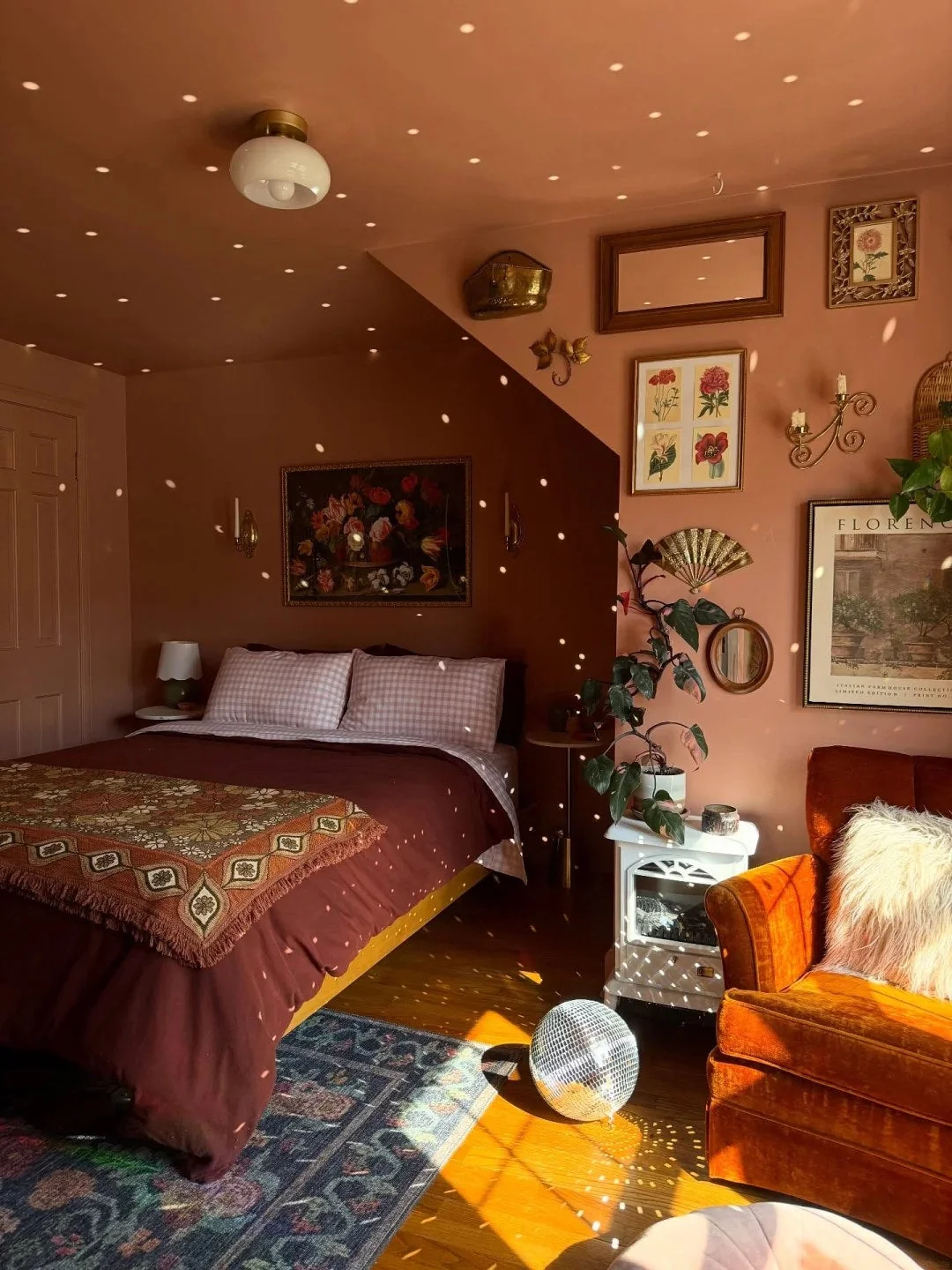
Use Shelves as Edited Storage
Open shelves can work in bedrooms when they are edited. Use them for books, a few objects, folded textiles, or pieces that make the room feel personal. If every shelf is full, the room will feel busy even when the furniture is beautiful.
For a calmer shelf, repeat materials. A few woven baskets, pale ceramics, stacked books, and one plant can feel collected, while too many unrelated colors will make the closet area louder.


Keep Low Furniture Quiet
Low storage is helpful when a room already has tall wardrobes or strong architectural details. A bench, trunk, low cabinet, or small table can hold essentials while preserving the sense of openness around the bed.
Low pieces are also useful at the foot of the bed. They can hold folded blankets or daily clothing, but they should leave enough walkway so the room still feels restful.


Repeat Materials Across the Home
A bedroom closet feels more considered when its materials connect to the rest of the home. Repeating wood, stone, glass, brass, or painted paneling in nearby rooms makes custom storage feel intentional instead of isolated.
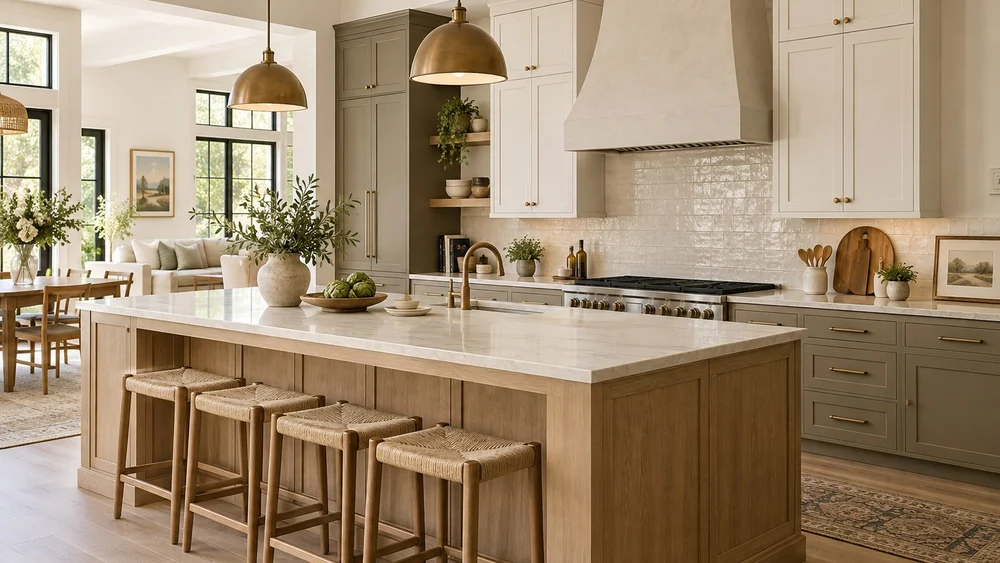
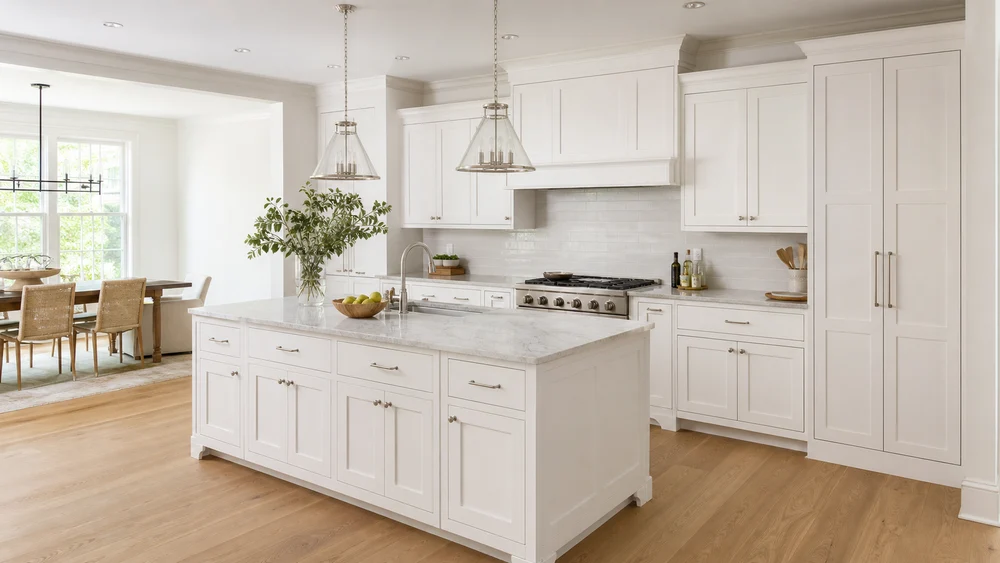
This is useful for whole-home projects: if the kitchen uses pale oak and quiet brass, the bedroom closet can echo those notes in a softer way. Repetition makes storage feel designed, even when the pieces are simple.
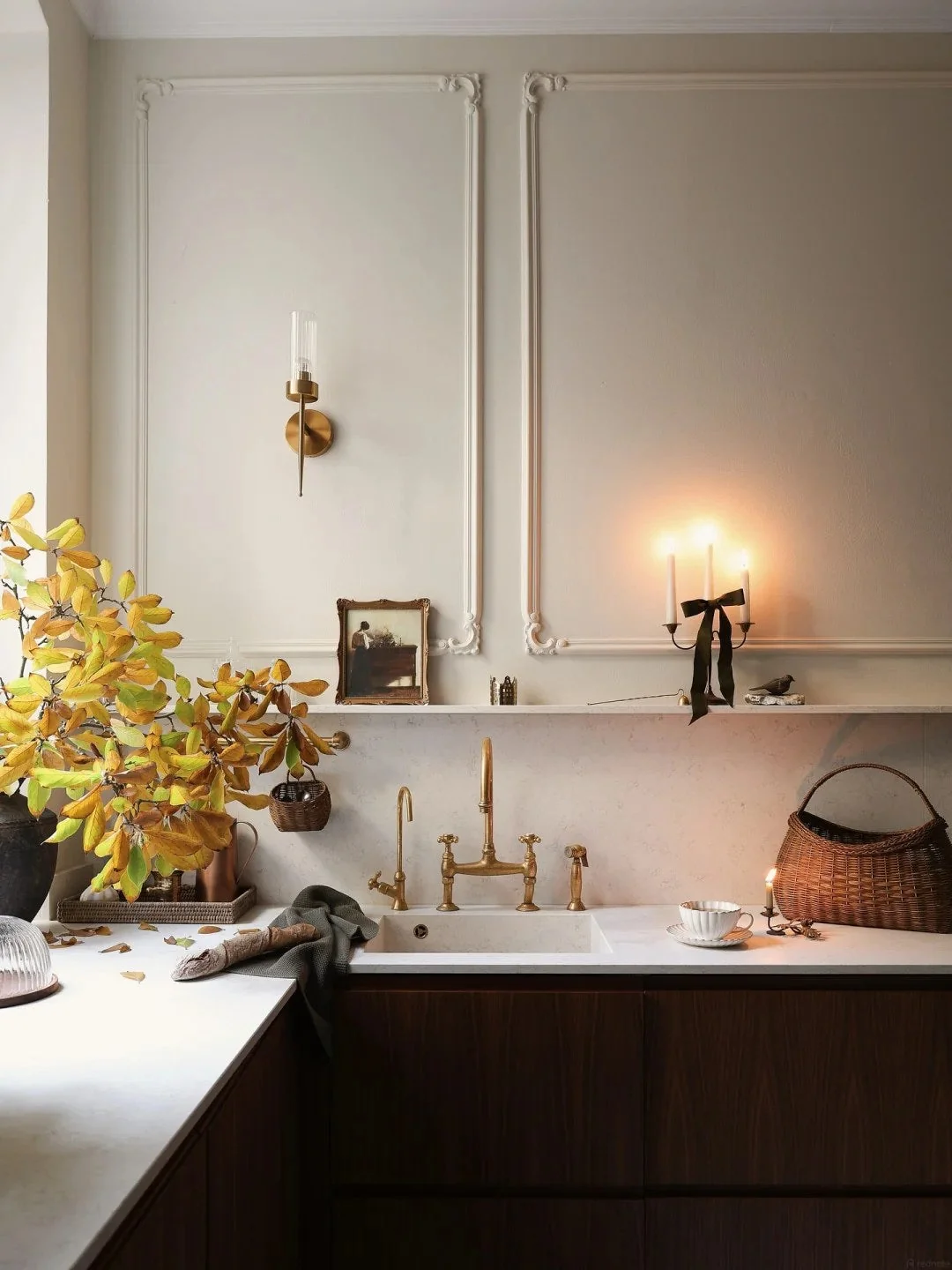
The Calm Closet Formula
For a bedroom that feels organized and still warm, choose one main storage move, then keep everything else quiet. Let wardrobes act like architecture, use hidden storage where possible, give daily items a small landing place, and edit open shelves carefully. The goal is not a perfect showroom closet. It is a bedroom where storage supports rest.