
Furnishing a Home from China? Foshan Sourcing Agent vs Alibaba
If you are buying furniture from China for a house, villa, or apartment, the key question is not where the lowest quote appears. It is which route gives you better control over budget, dimensions, quality, and delivery.

The 30-second answer
Start with how much furniture you need.
A few standard pieces
If the size and finish are fixed, only one or two suppliers are involved, and you can arrange inspection and shipping, Alibaba is usually the simpler route.
A whole-home package
If you need several rooms, multiple factories, custom dimensions, or coordinated finishes, a Foshan sourcing agent is usually easier to manage.
The practical hybrid
Use Alibaba to research styles and reference prices. Use a local agent for verification, samples, production follow-up, inspection, and loading.
Start with the total budget
What will the order actually cost?
Do not compare furniture prices alone. Your real budget includes the products, customization, transport inside China, inspection, storage, consolidation, export packaging, international freight, and destination charges.
Alibaba
Fast for comparing initial prices and buying a small number of standard pieces. With several suppliers, you will usually arrange inspection, transport, and consolidation separately.
Foshan sourcing agent
Adds a service fee but can coordinate several factories, inspections, warehouse receiving, and loading. This often makes a whole-home budget easier to control.

Confirm exactly what will be delivered
Will the furniture match what you approved?
Most problems begin when size, materials, color, and construction are not recorded clearly. A product photo confirms the general look; it does not replace a written specification.
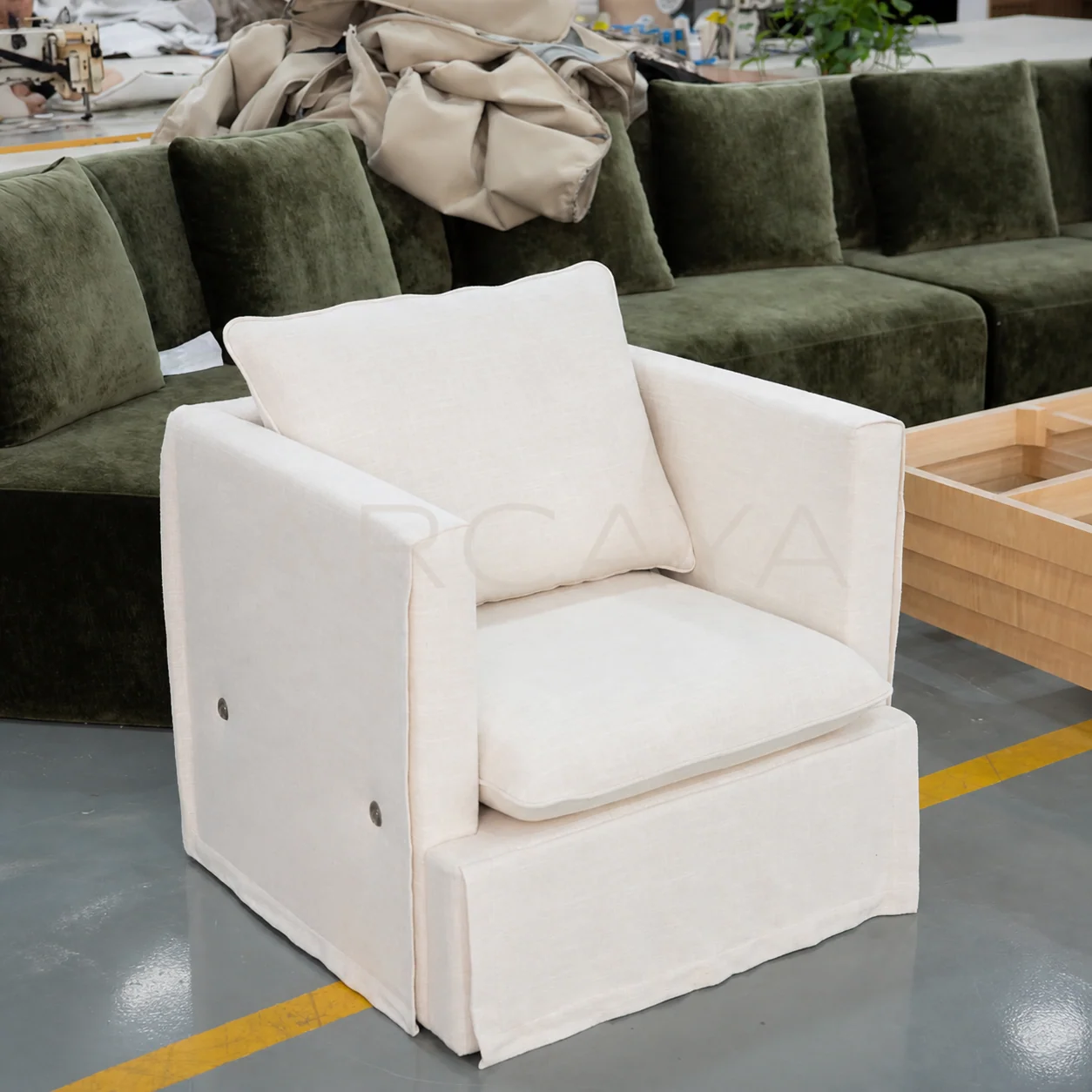
- DimensionsRecord overall size, seat height and depth, orientation, and allowed tolerance.
- MaterialsConfirm the frame, board, foam, fabric, stone, metal, and hardware.
- ColorUse an approved sample or code, not only “beige” or “walnut.”
- PackagingGlass, stone, corners, and moisture-sensitive surfaces need export protection.
Quality control
Do not wait until loading day for the first inspection.
A finished sofa can look correct while hiding the wrong frame, foam, suspension, or reinforcement. Custom furniture needs at least three control points.
-
Before production
Approve drawings, dimensions, materials, hardware, and finish samples. -
During production
Check the first unit and internal parts that will later be hidden. -
Before shipment
Check quantity, appearance, function, accessories, labels, and packaging.

What makes whole-home sourcing different
Each piece must work in the same home.
Sofas, dining tables, beds, and cabinets often come from different factories, but they still need one consistent approach to scale, wood tones, metal finishes, and upholstery. A local agent is most valuable when coordinating those shared standards across suppliers.

Shipping and installation
Factory completion is not the end of the job.
Different factories finish at different times and often use different labels and packaging standards. Before loading, the products need to be received in one place, identified, checked, and planned around their actual packed dimensions.
Ask for a packing list organized by room and item code, clear carton labels, assembly instructions, spare hardware, and loading photos. These records make installation easier and help establish responsibility if something arrives damaged or incomplete.
A lower-stress route
A whole-home furniture order can follow six clear steps.
- Set the rooms, priorities, and total budget
- Research styles and reference prices online
- Compare samples, suppliers, and local options
- Approve dimensions, materials, and finishes
- Follow production and inspect in stages
- Consolidate, load, and prepare installation records
Which route fits you?
Match the buying method to your order.
| Your situation | Alibaba direct | Foshan agent |
|---|---|---|
| One to three standard furniture pieces | Best fit | Inspection only, if needed |
| Living, dining, and bedroom furniture together | High management workload | Best fit |
| Custom dimensions, colors, or upholstery | Works for simple changes | Better for complex customization |
| Several factories sharing one container | You coordinate each supplier | Best fit |
| Your first furniture order from China | Useful for initial research | Stronger execution support |
How to make the final choice
For a simple order, buying directly through Alibaba can reduce service costs. For a whole-home, multi-factory, or customized order, a Foshan sourcing agent is mainly valuable because someone local manages the stages where expensive mistakes happen.
The most practical combination is often this: use Alibaba for ideas, product research, and reference pricing; use a local agent for supplier checks, samples, quality control, consolidation, and loading.